

Analyst
Qi Wang, CFA
qi.wang@uobkh.comAnalyst
Wendy Chen
wendy.chen@uobkh.comAnalyst
In connection with UOBKH institutional research
Key US Market Indices

- Geopolitical gambit meets the enduring “Fed Wildcard”. The July FOMC held rates steady, followed by Chair Warsh’s characteristically vague communication. This ambiguity reinforces our "Fed Wildcard" thesis, leaving both bond and equity investors guessing the rate path ahead. Concurrently, the geopolitical front remains highly fluid. Another round of US-Iran “escalation-then-de-escalation” orchestrated by Trump keeps energy prices volatile and inflation outlook uncertain.
- Broad market resilience amid rotations. US equities posted a mixed but resilient performance over the past two weeks. The S&P 500 and Dow Jones advanced 0.6% and 1.2% respectively, while the tech-heavy Nasdaq slipped 0.5%. This leaves YTD performances of all 3 indexes surprisingly similar at ~9%. We see a continuation of factor and sector rotation: capital continues to rotate out of high-beta momentum stocks, into defensive and cash-flow-rich sectors. Risk appetite has shifted from "fear of missing out" (FOMO) to a more selective "fear of missing earnings" (FOME).
- Deleveraging creates a cleaner setup. The market recently experienced a classic Wall Street hunt for overleverage: a once-USD45bn-AUM AI fund collapsed over last week of July. According to Goldman Sachs, that week marked the second-largest de-grossing week over the past decade. Although forced selling was painful, this systemic cleansing serves as a necessary reset for the US market. While the levered community dominated the storyline in late July, we expect US corporates to regain some control of the narrative ahead.
- The fundamentals remain favorable. We have passed the bulk of 2Q2026 US earnings season, with 86% of reported S&P 500 companies beating earnings estimates. Reflecting this strength, FY2026 earnings expectations for S&P 500 and Nasdaq have revised up to 29.3% and 46.1% respectively. Short-term market view is cautiously positive, as the combination of momentum de-leveraging, robust corporate earnings, and the impending wave of August buybacks create a favorable setup for market advance.
- Best performing sectors: Energy (XLE), Health Care (XLV), and Financials (XLF).
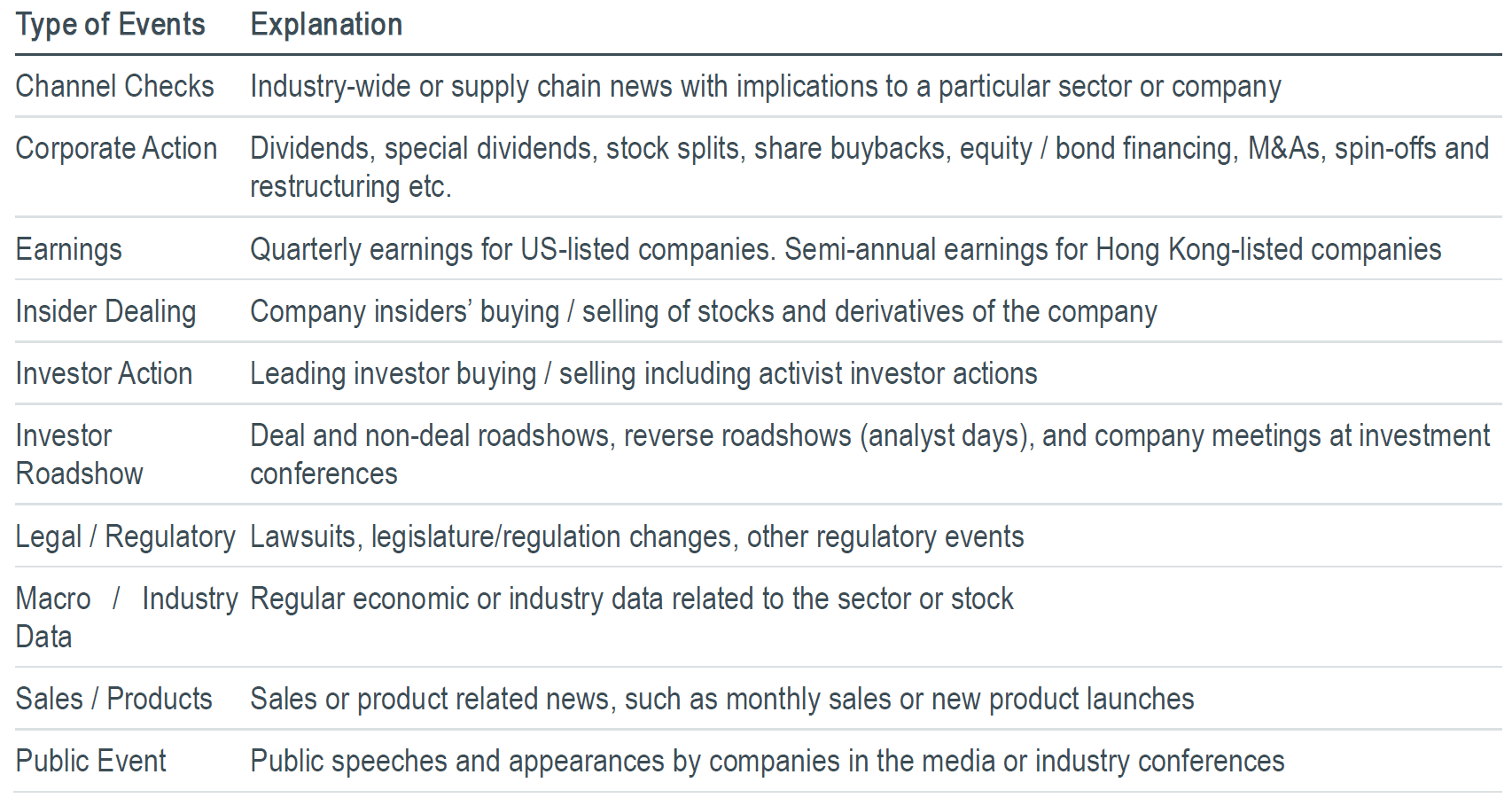
- Potential movers and shakers:

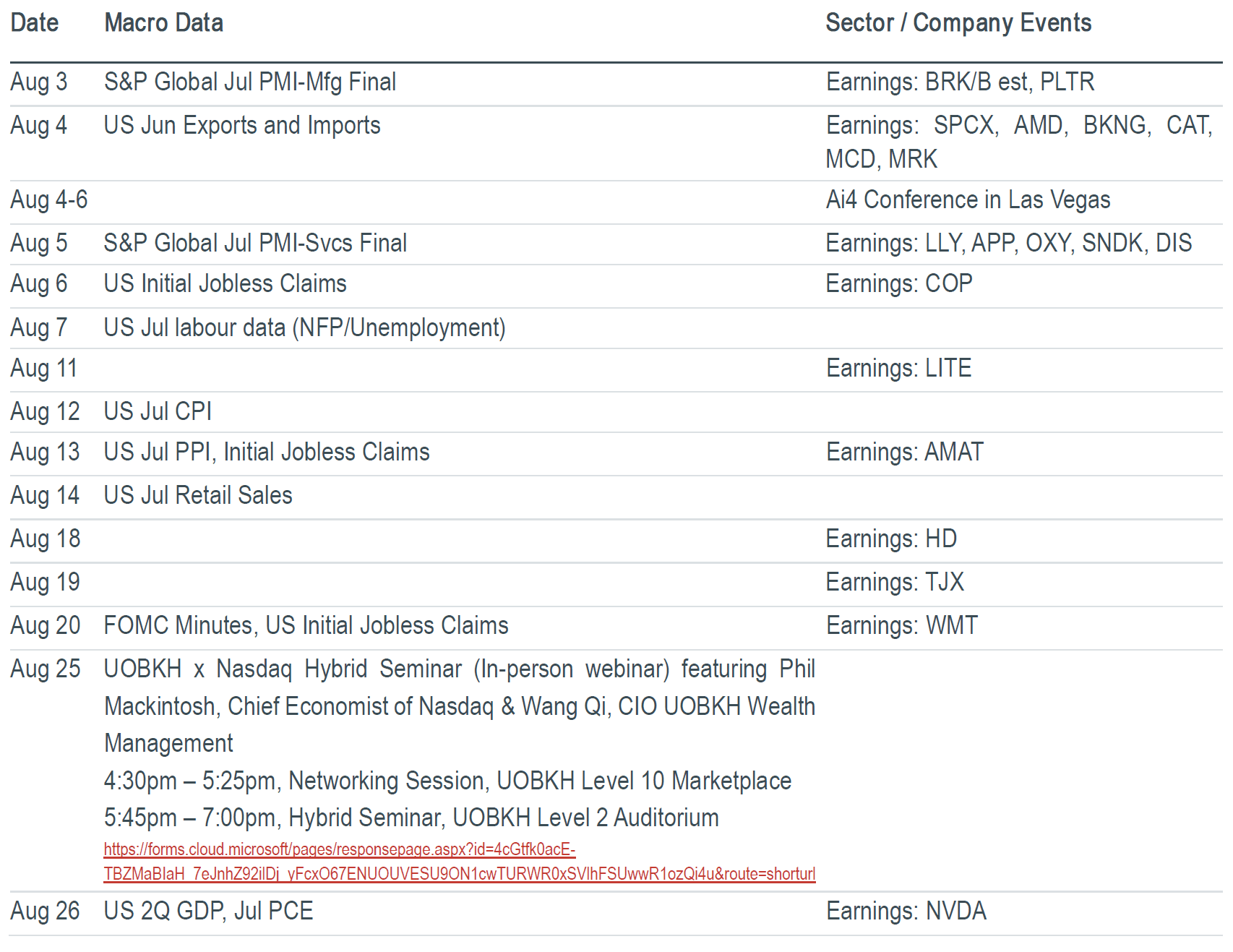
- Must Watch Events: US Jul labour data (Aug 7), US Jul CPI (Aug 12), US Jul PPI (Aug 13), US Jul Retail Sales (Aug 14), FOMC Minutes (Aug 20), US 2Q GDP, Jul PCE (Aug 26). Earnings: BRK/B est (Aug 3), AMD, SPCX & BKNG (Aug 4), LLY, APP, OXY & SNDK (Aug 5), LITE (Aug 11), WMT (Aug 20), NVDA (Aug 26). Details below.
Best 3 S&P Sectors (Past 2 Weeks)
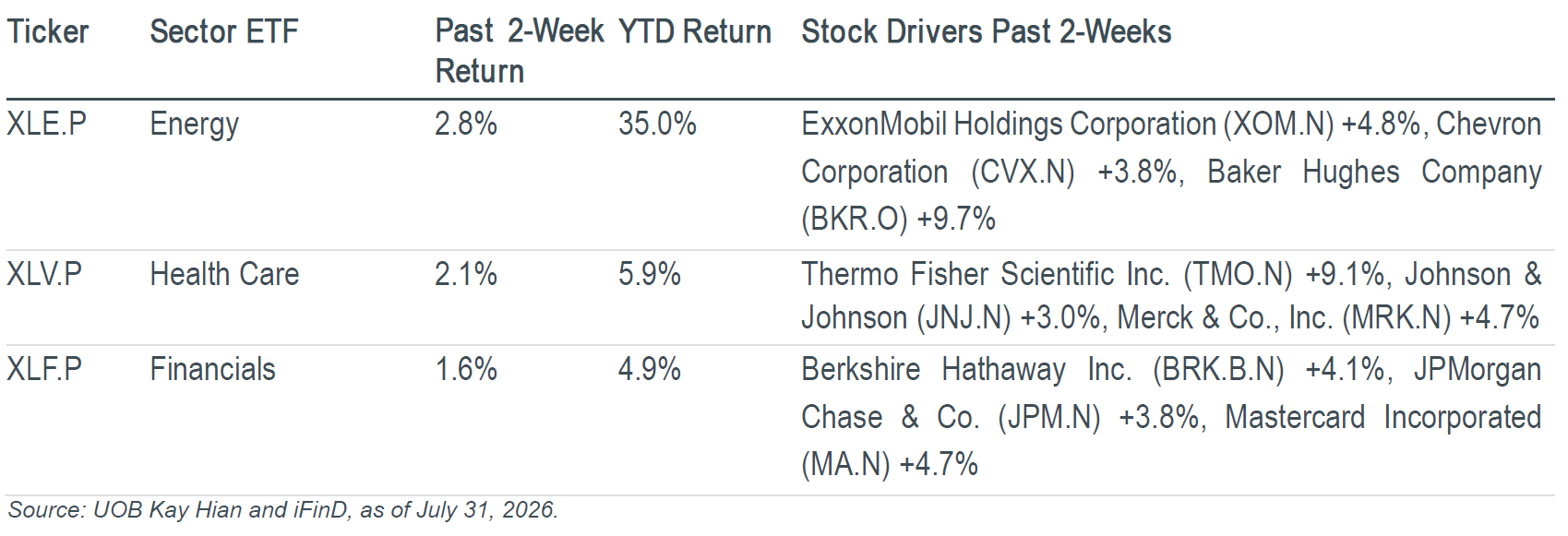
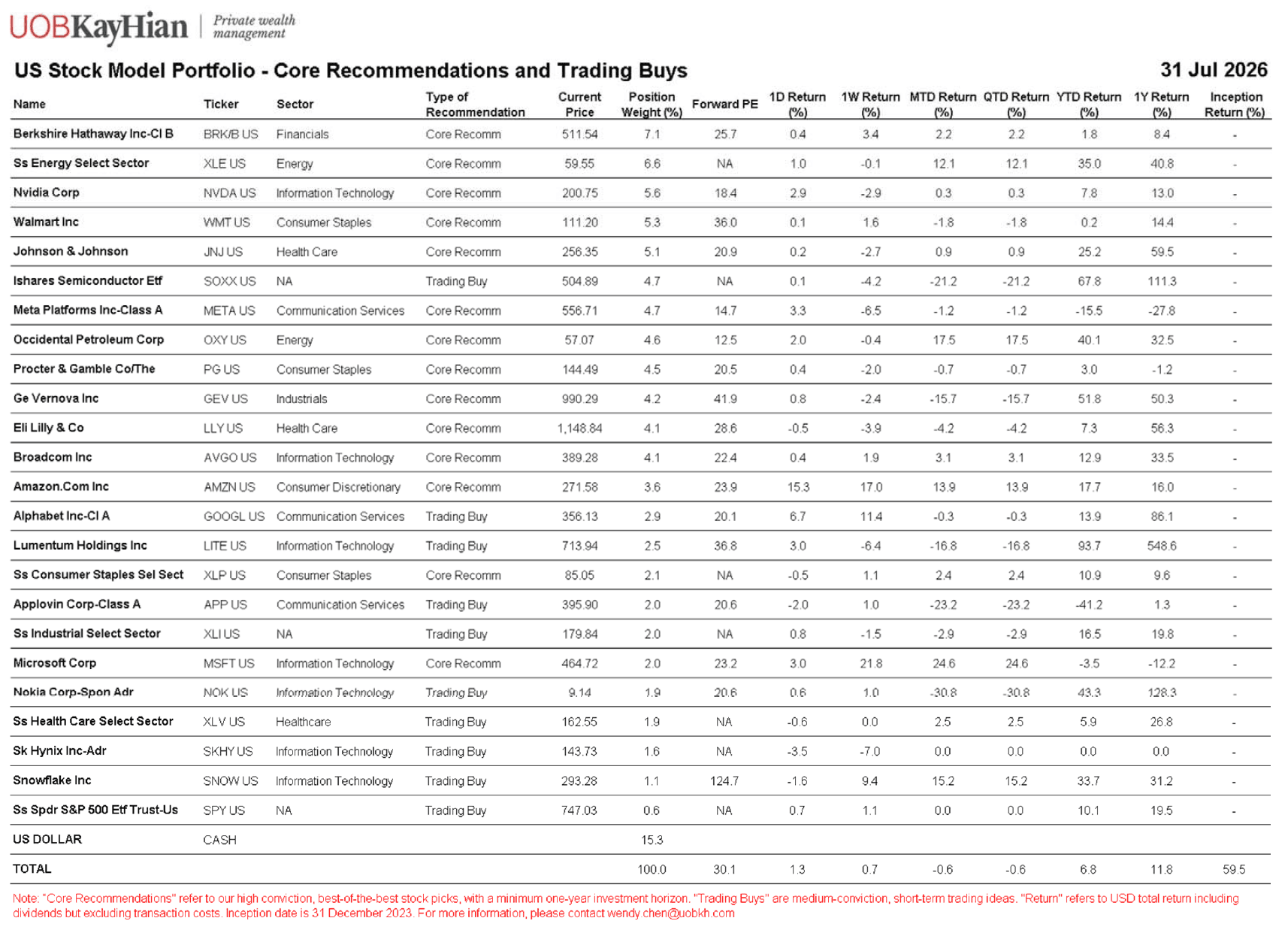
- Energy (XLE) extended its remarkable run, gaining 2.8% over the past two weeks and pushing its YTD return to an outstanding 35.0%. The sector continues to serve as the ultimate portfolio hedge as geopolitical risk premiums remain entrenched amid the ongoing fluidity in the Middle East and the Iran conflict. Baker Hughes (BKR) led the charge with a 9.7% surge, buoyed by robust oilfield services demand and strong international drilling activity. Integrated oil majors ExxonMobil (XOM) and Chevron (CVX) added 4.8% and 3.8% respectively, as they both reported positive revenue surprises for 2Q26, backed by the elevated oil price post Iran conflict. We continue to see energy as a good hedge for geopolitical tail risks, and XLE remains our Core Recommendation.
- Health Care (XLV) advanced 2.1%, bringing its YTD return to 5.9%. The sector re-established itself as a defensive compounder against momentum unwinding, as investors continue to seek refuge in cash-flow-rich, non-cyclical businesses. Thermo Fisher Scientific (TMO) was the standout with a 9.1% gain, beating 2Q26 earnings expectations and raising full-year guidance. Merck (MRK) gained 4.7% on its resilient pharmaceutical pipeline. Johnson & Johnson (JNJ) added 3.0% after proposing a resolution plan of its decade-old ovarian talc litigation disputes. We see healthcare sector offers downside protection while participating in structural innovation, making it a critical part of our barbell strategy. We maintain JNJ as our Core Recommendation and recently added XLV as a Trading Buy.
- Financials (XLF) posted a steady 1.6% gain, lifting its YTD return to 4.9%, underpinned by robust earnings momentum and resilient consumer spending. JPMorgan Chase (JPM) advanced 3.8%, continuing to build on its record-breaking 2Q26 results, proving the enduring strength of the US consumer and capital markets. Mastercard (MA) climbed 4.7% post its robust 2Q26 earnings beat, reflecting strong double-digit revenue growth with resilient travel and cross-border activities. Berkshire Hathaway (BRK.B) gained 4.1%, reaffirming its status as the ultimate defensive shelter with its massive cash hoard and diversified earnings streams. BRK.B remains our Core Recommendation.
Worst 3 S&P Sectors (Past 2 Weeks)
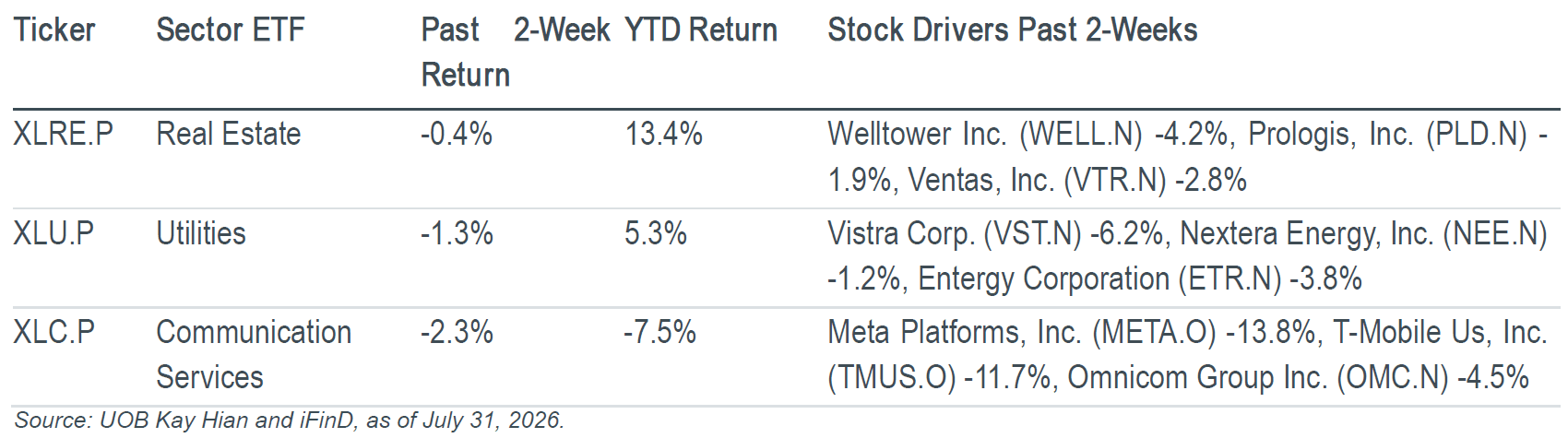
- Real Estate (XLRE) edged lower by 0.4%, a mild consolidation that brings its impressive YTD return to 13.4%. REITs remain highly sensitive to interest rate expectations, and the recent resurgence of inflation concerns prompted tactical de-risking. Welltower (WELL) and Ventas (VTR) declined 4.2% and 2.8% respectively, while industrial logistics leader Prologis (PLD) dipped 1.9%. However, the sector’s robust YTD performance underscores that US logistics and housing modernization fundamentals remain intact.
- Utilities (XLU) retreated 1.3%, moderating its YTD gain to 5.3%. The sector’s recent underperformance highlights its acute vulnerability as a "bond proxy" in the current macro environment. As the enduring "Fed Wildcard" keeps rate hike fears alive, upward pressure on Treasury yields directly compresses the valuations of high-dividend utility stocks. Electricity and power plays all suffered: Vistra Corp. (VST) fell 6.2%, Nextera Energy (NEE) slipped 1.2%, and Entergy (ETR) down 3.8% over past 2 weeks. While rising discount rates have overshadowed the sector, its long-term narrative remains intact: a multi-year power demand upgrade to support AI data center expansion and grid modernization.
- Communication Services (XLC) fell 2.3% over the past two weeks, extending its YTD loss to 7.5%. The sector was weighed down by Meta Platforms (META) that dropped 13.8%, unwinding its pre-result rally. The company’s 3Q26 guidance came slightly below consensus, and coupled with a cautious capex commentary, the stock experienced notable multiple contraction. T-Mobile (TMUS) slipped 11.7% after missing 2Q26 expectation, while Omnicom (OMC) also declined 4.5% despite good 2Q26 result, reflecting pressure on telecom yields in a "higher-for-longer" rate environment. Despite the near-term volatility, we believe the market’s reaction to Meta’s AI monetization efforts was overdone and maintain META as our Core Recommendation.
Stocks: Potential Movers and Shakers

- Strong 2Q26 performance. Amazon reported revenue of USD 201 bn, up 20% yoy and slightly ahead of expectations, while EBIT of USD 27.5 bn exceeded the USD 26 bn consensus. AWS revenue rose 37%, above buy-side expectations of 35%, with operating margin expanding to 39% and backlog increasing 36% qoq to USD 496 bn.
- AI investment economics remain attractive. Management said servers have a five- to six-year useful life, most AI capacity is contracted for five years, and capital investments typically break even in under three years, implying an internal rate of return above 30%.
- Core Recommendation maintained. Amazon's leading positions in e-commerce and cloud computing, together with the largest incremental dollar increase in cloud revenue among the three major hyperscalers, support our positive view. Strong backlog growth and margin expansion also provide support for elevated capex. (Garrick Li)

- Earnings exceeded expectations for 4QFY26. Microsoft reported revenue of USD 90 bn, above the USD 87.6 bn consensus, while EPS of USD 4.74 exceeded the USD 4.24 estimate.
- Azure and Copilot remained key growth drivers. Azure revenue grew 43%, ahead of the 40% expectation, and management guided to further acceleration. Copilot users reached 30 mn versus the 25 mn forecast, although penetration remained low at 5%.
- AI cloud economics support higher capex. The results reinforce the commercial viability of AI-driven cloud computing, easing concerns over capital expenditure and supporting Microsoft's increased investment. (Garrick Li)

- Strong 2Q26 results. Alphabet reported revenue of USD 119.8 bn, up 24% yoy and slightly ahead of expectations, while EPS of USD 2.85 was modestly below consensus. Advertising revenue grew 14.4% yoy, and Google Cloud revenue rose 82% to USD 24.8 bn, exceeding elevated buy-side expectations of more than 70% growth.
- Backlog supports revenue visibility. Order backlog increased 11.7% qoq to USD 514 bn, indicating sustained demand across the cloud business.
- Constructive despite post-results weakness. Shares fell about 7% after earnings as investors focused on negative free cash flow and concerns that cloud margins may be near a peak. We remain positive, as the expanding backlog provides greater visibility on future revenue. (Garrick Li)

- Results for 2Q26 were broadly in line. Meta reported revenue of USD 60.8 bn, up 28% yoy and modestly above the USD 60.2 bn consensus. Operating income also slightly exceeded expectations excluding one-off expenses, while the midpoint of 3Q revenue guidance of USD 61-64 bn was below the USD 63 bn consensus.
- AI monetization visibility remains limited. Despite robust advertising trends, investors are seeking clearer evidence that elevated AI capex will translate into revenue. Management's earnings commentary did not fully address these concerns, as product development on top of Meta's AI models and data-center infrastructure remains at an early stage.
- Long-term positive, near-term neutral. Meta's core advertising business remains strong, but near-term visibility on returns from AI investment is limited. We retain a constructive long-term view while maintaining a Neutral take. (Garrick Li)

- Expanding US manufacturing capacity. Eli Lilly and contract manufacturer Resilience will jointly invest USD 750 mn to expand pharmaceutical manufacturing in Ohio, including production of Lilly's KwikPen injectable devices for diabetes and obesity. The project is expected to strengthen domestic supply and create 400 high-skilled jobs.
- Investment supports demand growth. The project forms part of Lilly's broader US manufacturing strategy, backed by more than USD 55 bn of domestic commitments since 2020, and is intended to support rising demand for diabetes and obesity treatments.
- Near-term cash outflow, limited long-term impact. Shares weakened as investors assessed potential margin pressure from the investment, although we expect the effect on long-term growth to be limited.
- Next results are a key catalyst. Lilly is scheduled to report 2Q26 results on August 5, with consensus revenue of about USD 20.69 bn and EPS of USD 6.55. Strong GLP-1 demand supports potential upside, although investment spending may weigh on margins.
- Positive long-term view. We remain constructive as the expansion increases capacity, improves supply-chain resilience and supports Lilly's long-term growth strategy. (Tang Kai Jie)

- Firefly Bio acquisition strengthens oncology. Johnson & Johnson completed its USD 1 bn acquisition of Firefly Bio, adding the Firelink degrader antibody conjugate platform and expanding its next-generation antibody engineering capabilities, particularly for KRAS-driven solid tumors. The transaction is expected to reduce 2026 EPS by around USD 0.46.
- Sail Biomedicines partnership expands in-vivo CAR-T exposure. Johnson & Johnson committed USD 785 mn upfront and secured an option to acquire Sail for USD 2.58 bn, extending its autoimmune disease pipeline while adding near-term earnings dilution risk.
- Talc settlement could reduce legal uncertainty. Johnson & Johnson agreed to an estimated USD 5.5 bn settlement covering about 76,000 ovarian cancer-related claims, subject to sufficient claimant approval. A successful settlement could resolve most outstanding cases and improve visibility over future liabilities.
- Guidance reduced to reflect deal costs. Johnson & Johnson lowered 2026 adjusted EPS guidance to USD 10.96-11.11 while maintaining revenue guidance of USD 100.8-101.4 bn.
- Slightly positive overall. Strategic investment in oncology and immunology strengthens the long-term pipeline, while the proposed talc settlement reduces a longstanding legal overhang; these benefits partly offset near-term earnings pressure. (Tang Kai Jie)

- Solid 2Q26 results despite softer guidance. Netflix reported revenue of USD 12.6 bn, up 13% yoy, supported by membership growth, higher viewing hours, pricing and advertising. EPS rose to USD 0.80, and management maintained its 2026 operating margin target of 31.5%; however, 3Q26 revenue guidance of USD 12.9 bn was slightly below market expectations.
- Advertising and pricing remain key monetization drivers. Netflix remains on track to generate about USD 3 bn in advertising revenue in 2026, supported by its live-event slate, AI-powered advertising tools, Netflix Ads Suite and broader programmatic capabilities. Recent price increases in the US, Mexico and Spain have performed in line with management's expectations.
- Broader content ecosystem supports engagement. Expansion into live sports, video podcasts, creator partnerships, local broadcaster content and cloud-based games should strengthen engagement and create additional monetization opportunities.
- Positive on long-term earnings growth. We remain positive as Netflix's content slate, pricing power and growing advertising business should support revenue growth and margin expansion, while continued investment in technology and content diversification should support member acquisition and retention. (Shaina Mahtani)

- Vehicle production milestone highlights scale and demand tension. Tesla produced its 10 millionth vehicle on July 30, becoming the first EV manufacturer to reach the milestone. This followed 2Q26 deliveries of 480,126 units, up 25% yoy, but annual deliveries fell for a second consecutive year to 1.64 mn in 2026, down 9% yoy, as the aging Model 3/Y line-up faced stronger competition.
- Growth catalysts are increasingly outside autos. The new US ban on Chinese humanoid and quadruped robots reduces competition for Tesla's Optimus programme in the US. Tesla has also contracted a 140 MW Texas solar farm and 90% of a 509 MW Arizona solar-and-storage project.
- Execution remains the key share-price driver. The next catalysts are the pace of robotaxi expansion into additional US cities, progress toward Optimus volume production and the 3Q26 delivery trend. We remain cautious until these initiatives generate material revenue, given softer vehicle demand and thin automotive margins. (Ken Lee)

- Upcoming results will test operating momentum. Disney will report 3QFY26 results on August 5. In the previous quarter, revenue rose 7% yoy to USD 25.2 bn and adjusted EPS increased to USD 1.57, ahead of consensus; management subsequently guided for about 12% adjusted EPS growth in FY2026.
- Toy Story 5 supports studio momentum. The film exceeded USD 1 bn in worldwide box office receipts in late July and was the highest-grossing film of 2026 at the time. Its performance reinforces the value of Disney's established intellectual property and should support studio profitability and downstream streaming monetisation, although the weaker reception for the live-action Moana highlights release-level variability.
- Slightly positive with near-term risks. Improving streaming profitability and solid earnings are balanced by higher sports programming costs, mixed domestic park trends and uncertainty over consumer spending. A stronger-than-expected 3Q26 result could provide a catalyst. (Shaina Mahtani)

- Subscriber growth supported a guidance upgrade. Verizon added 184,000 postpaid phone subscribers in 2Q26, ahead of expectations, while mobility and broadband service revenue rose 2.8% yoy to USD 23.4 bn. Adjusted EPS increased 6.6% yoy to USD 1.30, and management raised 2026 adjusted EPS growth guidance to 6-7% and free cash flow growth guidance to 9-10%.
- AI-related fibre demand creates a new growth avenue. Verizon secured an agreement worth more than USD 1 bn with Google to provide dark-fibre connectivity between data centres. Management expects additional agreements by end-2026 that could generate several billion dollars of revenue over the coming years.
- Underlying growth and leverage remain constraints. Total revenue declined 0.7% yoy in 2Q26 as equipment revenue fell nearly 20%, while wireless service revenue is expected to remain flat in 2026 during the transition to volume-led growth. Unsecured debt of USD 136.5 bn also limits financial flexibility despite recent deleveraging. (Shaina Mahtani)

- 4QFY26 sales missed while core EPS edged above expectations. Net sales were USD 21.2 bn, with organic sales flat yoy and 1% below consensus. Operating income fell 9% to USD 3.9 bn and core operating margin declined 1.3 ppt to 19.5%, while core EPS of USD 1.43 fell 3% yoy but beat consensus by 1%.
- FY26 growth remained modest. Full-year net sales reached USD 87.0 bn, with organic sales up 1%. Operating income declined 3% to USD 19.7 bn, while core EPS increased 1% to USD 6.89.
- Beauty was the only division to grow organically in 4QFY26. Organic sales changes for Beauty, Grooming, Health Care, Fabric & Home Care, and Baby, Feminine & Family Care were 4%, 0%, -1%, 0% and -2%, respectively. Beauty benefited from 3 ppt of volume growth.
- FY27 guidance points to subdued growth. Management expects organic sales growth of 1-3% and core EPS growth of 0-3%. Guidance includes a 30-50 bp revenue headwind from restructuring and an approximately USD 1.4 bn after-tax earnings headwind from input costs, FX and below-the-line items; planned shareholder returns remain USD 10 bn of dividends and USD 5 bn of buybacks.
- Cost inflation is the main near-term risk. Management expects roughly USD 1 bn of after-tax pressure from raw materials, energy and freight, assuming oil at USD 90 per barrel, with most of the impact concentrated in 1HFY27. 1QFY27 EPS is expected to decline by at least 5% yoy.
- Neutral despite early share recovery in China and the US. China returned to market-share growth for the first time in 15 quarters, while US brand-retailer pairings showing stable or rising share improved to about 50% in 2HFY26. However, the difficult macro backdrop, a 3% post-results share-price decline and a 2% cut in the consensus target price to USD 159.77 support a near-term range of USD 138-154. (Ejann Hiew)

- Chinese online distribution rights to be withdrawn. Nike will terminate the mainland China online sales rights of distribution partners Topsports (6110.HK) and Pou Sheng (3813.HK) from Jan 1, 2027.
- Direct-channel consolidation is the strategic focus. The move will concentrate online sales through Nike-operated flagship channels, giving the company greater control over digital merchandising, pricing and customer engagement.
- Neutral pending evidence of execution. The transition may improve channel control over time, but the submission provides no quantified sales or earnings impact; we therefore maintain a Neutral view. (Ejann Hiew)

- 1H26 organic revenue increased 2%. LVMH reported revenue of EUR 38.64 bn, with organic growth of 2% yoy. Wines & Spirits, Fashion & Leather Goods, Perfumes & Cosmetics, Watches & Jewellery and Selective Retailing recorded organic growth of 5%, -1%, 0%, 9% and 5%, respectively. Net income was broadly flat at EUR 5.70 bn and 8% above consensus.
- Chinese demand remained broadly stable. Local and tourist spending by Chinese consumers was flat in 1H26, although offshore demand improved during 2Q26. Management noted that domestic consumption remained high by historical standards but was increasingly concentrated around major shopping events.
- Wines & Spirits is expected to retain growth. Management expects the division to expand at constant currencies in 2026, albeit at a slower pace than the 5% organic growth recorded in 1H26, which was mainly volume-driven.
- FX and comparison effects cloud 2H26 visibility. Management expects a modest positive currency impact on revenue, partly offset by the DFS disposals, while the negative FX effect on margins should be similar to 1H26. The 2H26 comparison base is also more demanding.
- Neutral pending a clearer catalyst. The shares rose about 2% after results, while the consensus target price remained EUR 568.04. At 19.6x one-year forward earnings versus a 10-year average of 24.2x, valuation is below its historical norm, but persistent inflation and weak appetite for consumer discretionary stocks could keep the shares range-bound at EUR 440-540 in the near term. (Stella Guo / Ejann Hiew)
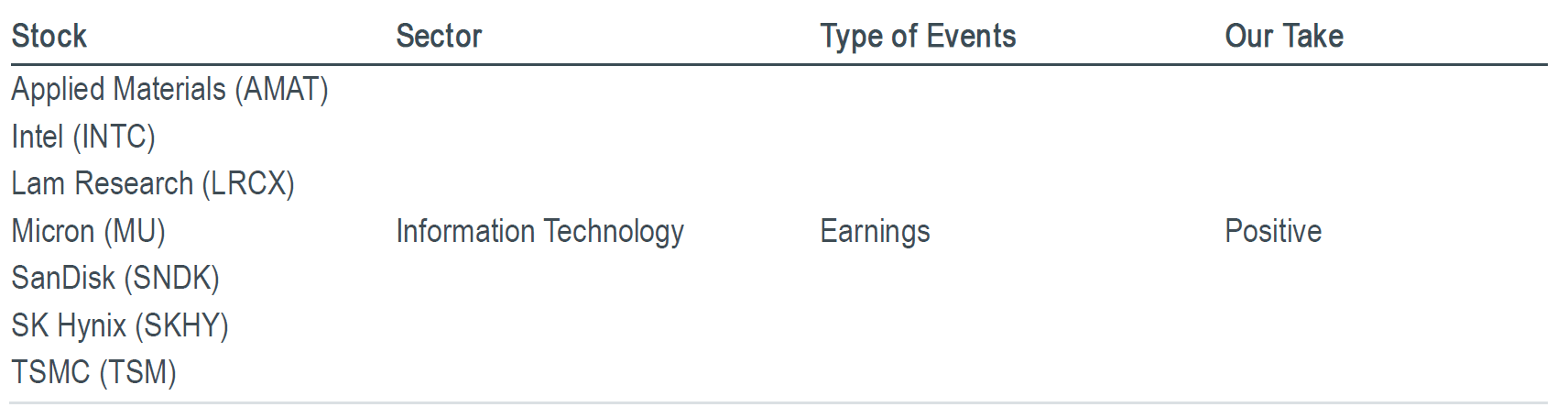
- Deleveraging appears close to completion. Following the collapse of Situational Awareness, a highly leveraged AI-focused technology fund, we believe forced selling across non-China AI and semiconductor names is nearing an end. This should reduce a key technical headwind for the sector.
- AI investment fundamentals remain intact. Recent concerns over an AI bubble, peak capital expenditure and China-related risks appear overstated relative to underlying demand. The sharp pullback has created a more attractive entry point for selected high-quality beneficiaries of sustained AI infrastructure spending.
- Prefer equipment and foundry leaders, with rebound potential in memory. Applied Materials and Lam Research offer strong visibility from structural capacity requirements across advanced and mature nodes, while TSMC remains a preferred foundry exposure to AI demand. Heavily sold-down names including SanDisk, Micron, Intel and SK Hynix could also rebound as positioning normalizes. (Johnny Yum)
Appendix A – US Stock Model Portfolio
Key US Market Indices
- Geopolitical gambit meets the enduring “Fed Wildcard”. The July FOMC held rates steady, followed by Chair Warsh’s characteristically vague communication. This ambiguity reinforces our "Fed Wildcard" thesis, leaving both bond and equity investors guessing the rate path ahead. Concurrently, the geopolitical front remains highly fluid. Another round of US-Iran “escalation-then-de-escalation” orchestrated by Trump keeps energy prices volatile and inflation outlook uncertain.
- Broad market resilience amid rotations. US equities posted a mixed but resilient performance over the past two weeks. The S&P 500 and Dow Jones advanced 0.6% and 1.2% respectively, while the tech-heavy Nasdaq slipped 0.5%. This leaves YTD performances of all 3 indexes surprisingly similar at ~9%. We see a continuation of factor and sector rotation: capital continues to rotate out of high-beta momentum stocks, into defensive and cash-flow-rich sectors. Risk appetite has shifted from "fear of missing out" (FOMO) to a more selective "fear of missing earnings" (FOME).
- Deleveraging creates a cleaner setup. The market recently experienced a classic Wall Street hunt for overleverage: a once-USD45bn-AUM AI fund collapsed over last week of July. According to Goldman Sachs, that week marked the second-largest de-grossing week over the past decade. Although forced selling was painful, this systemic cleansing serves as a necessary reset for the US market. While the levered community dominated the storyline in late July, we expect US corporates to regain some control of the narrative ahead.
- The fundamentals remain favorable. We have passed the bulk of 2Q2026 US earnings season, with 86% of reported S&P 500 companies beating earnings estimates. Reflecting this strength, FY2026 earnings expectations for S&P 500 and Nasdaq have revised up to 29.3% and 46.1% respectively. Short-term market view is cautiously positive, as the combination of momentum de-leveraging, robust corporate earnings, and the impending wave of August buybacks create a favorable setup for market advance.
- Best performing sectors: Energy (XLE), Health Care (XLV), and Financials (XLF).
- Potential movers and shakers:
- Must Watch Events: US Jul labour data (Aug 7), US Jul CPI (Aug 12), US Jul PPI (Aug 13), US Jul Retail Sales (Aug 14), FOMC Minutes (Aug 20), US 2Q GDP, Jul PCE (Aug 26). Earnings: BRK/B est (Aug 3), AMD, SPCX & BKNG (Aug 4), LLY, APP, OXY & SNDK (Aug 5), LITE (Aug 11), WMT (Aug 20), NVDA (Aug 26). Details below.
Best 3 S&P Sectors (Past 2 Weeks)
- Energy (XLE) extended its remarkable run, gaining 2.8% over the past two weeks and pushing its YTD return to an outstanding 35.0%. The sector continues to serve as the ultimate portfolio hedge as geopolitical risk premiums remain entrenched amid the ongoing fluidity in the Middle East and the Iran conflict. Baker Hughes (BKR) led the charge with a 9.7% surge, buoyed by robust oilfield services demand and strong international drilling activity. Integrated oil majors ExxonMobil (XOM) and Chevron (CVX) added 4.8% and 3.8% respectively, as they both reported positive revenue surprises for 2Q26, backed by the elevated oil price post Iran conflict. We continue to see energy as a good hedge for geopolitical tail risks, and XLE remains our Core Recommendation.
- Health Care (XLV) advanced 2.1%, bringing its YTD return to 5.9%. The sector re-established itself as a defensive compounder against momentum unwinding, as investors continue to seek refuge in cash-flow-rich, non-cyclical businesses. Thermo Fisher Scientific (TMO) was the standout with a 9.1% gain, beating 2Q26 earnings expectations and raising full-year guidance. Merck (MRK) gained 4.7% on its resilient pharmaceutical pipeline. Johnson & Johnson (JNJ) added 3.0% after proposing a resolution plan of its decade-old ovarian talc litigation disputes. We see healthcare sector offers downside protection while participating in structural innovation, making it a critical part of our barbell strategy. We maintain JNJ as our Core Recommendation and recently added XLV as a Trading Buy.
- Financials (XLF) posted a steady 1.6% gain, lifting its YTD return to 4.9%, underpinned by robust earnings momentum and resilient consumer spending. JPMorgan Chase (JPM) advanced 3.8%, continuing to build on its record-breaking 2Q26 results, proving the enduring strength of the US consumer and capital markets. Mastercard (MA) climbed 4.7% post its robust 2Q26 earnings beat, reflecting strong double-digit revenue growth with resilient travel and cross-border activities. Berkshire Hathaway (BRK.B) gained 4.1%, reaffirming its status as the ultimate defensive shelter with its massive cash hoard and diversified earnings streams. BRK.B remains our Core Recommendation.
Worst 3 S&P Sectors (Past 2 Weeks)
- Real Estate (XLRE) edged lower by 0.4%, a mild consolidation that brings its impressive YTD return to 13.4%. REITs remain highly sensitive to interest rate expectations, and the recent resurgence of inflation concerns prompted tactical de-risking. Welltower (WELL) and Ventas (VTR) declined 4.2% and 2.8% respectively, while industrial logistics leader Prologis (PLD) dipped 1.9%. However, the sector’s robust YTD performance underscores that US logistics and housing modernization fundamentals remain intact.
- Utilities (XLU) retreated 1.3%, moderating its YTD gain to 5.3%. The sector’s recent underperformance highlights its acute vulnerability as a "bond proxy" in the current macro environment. As the enduring "Fed Wildcard" keeps rate hike fears alive, upward pressure on Treasury yields directly compresses the valuations of high-dividend utility stocks. Electricity and power plays all suffered: Vistra Corp. (VST) fell 6.2%, Nextera Energy (NEE) slipped 1.2%, and Entergy (ETR) down 3.8% over past 2 weeks. While rising discount rates have overshadowed the sector, its long-term narrative remains intact: a multi-year power demand upgrade to support AI data center expansion and grid modernization.
- Communication Services (XLC) fell 2.3% over the past two weeks, extending its YTD loss to 7.5%. The sector was weighed down by Meta Platforms (META) that dropped 13.8%, unwinding its pre-result rally. The company’s 3Q26 guidance came slightly below consensus, and coupled with a cautious capex commentary, the stock experienced notable multiple contraction. T-Mobile (TMUS) slipped 11.7% after missing 2Q26 expectation, while Omnicom (OMC) also declined 4.5% despite good 2Q26 result, reflecting pressure on telecom yields in a "higher-for-longer" rate environment. Despite the near-term volatility, we believe the market’s reaction to Meta’s AI monetization efforts was overdone and maintain META as our Core Recommendation.
Stocks: Potential Movers and Shakers
- Strong 2Q26 performance. Amazon reported revenue of USD 201 bn, up 20% yoy and slightly ahead of expectations, while EBIT of USD 27.5 bn exceeded the USD 26 bn consensus. AWS revenue rose 37%, above buy-side expectations of 35%, with operating margin expanding to 39% and backlog increasing 36% qoq to USD 496 bn.
- AI investment economics remain attractive. Management said servers have a five- to six-year useful life, most AI capacity is contracted for five years, and capital investments typically break even in under three years, implying an internal rate of return above 30%.
- Core Recommendation maintained. Amazon's leading positions in e-commerce and cloud computing, together with the largest incremental dollar increase in cloud revenue among the three major hyperscalers, support our positive view. Strong backlog growth and margin expansion also provide support for elevated capex. (Garrick Li)
- Earnings exceeded expectations for 4QFY26. Microsoft reported revenue of USD 90 bn, above the USD 87.6 bn consensus, while EPS of USD 4.74 exceeded the USD 4.24 estimate.
- Azure and Copilot remained key growth drivers. Azure revenue grew 43%, ahead of the 40% expectation, and management guided to further acceleration. Copilot users reached 30 mn versus the 25 mn forecast, although penetration remained low at 5%.
- AI cloud economics support higher capex. The results reinforce the commercial viability of AI-driven cloud computing, easing concerns over capital expenditure and supporting Microsoft's increased investment. (Garrick Li)
- Strong 2Q26 results. Alphabet reported revenue of USD 119.8 bn, up 24% yoy and slightly ahead of expectations, while EPS of USD 2.85 was modestly below consensus. Advertising revenue grew 14.4% yoy, and Google Cloud revenue rose 82% to USD 24.8 bn, exceeding elevated buy-side expectations of more than 70% growth.
- Backlog supports revenue visibility. Order backlog increased 11.7% qoq to USD 514 bn, indicating sustained demand across the cloud business.
- Constructive despite post-results weakness. Shares fell about 7% after earnings as investors focused on negative free cash flow and concerns that cloud margins may be near a peak. We remain positive, as the expanding backlog provides greater visibility on future revenue. (Garrick Li)
- Results for 2Q26 were broadly in line. Meta reported revenue of USD 60.8 bn, up 28% yoy and modestly above the USD 60.2 bn consensus. Operating income also slightly exceeded expectations excluding one-off expenses, while the midpoint of 3Q revenue guidance of USD 61-64 bn was below the USD 63 bn consensus.
- AI monetization visibility remains limited. Despite robust advertising trends, investors are seeking clearer evidence that elevated AI capex will translate into revenue. Management's earnings commentary did not fully address these concerns, as product development on top of Meta's AI models and data-center infrastructure remains at an early stage.
- Long-term positive, near-term neutral. Meta's core advertising business remains strong, but near-term visibility on returns from AI investment is limited. We retain a constructive long-term view while maintaining a Neutral take. (Garrick Li)
- Expanding US manufacturing capacity. Eli Lilly and contract manufacturer Resilience will jointly invest USD 750 mn to expand pharmaceutical manufacturing in Ohio, including production of Lilly's KwikPen injectable devices for diabetes and obesity. The project is expected to strengthen domestic supply and create 400 high-skilled jobs.
- Investment supports demand growth. The project forms part of Lilly's broader US manufacturing strategy, backed by more than USD 55 bn of domestic commitments since 2020, and is intended to support rising demand for diabetes and obesity treatments.
- Near-term cash outflow, limited long-term impact. Shares weakened as investors assessed potential margin pressure from the investment, although we expect the effect on long-term growth to be limited.
- Next results are a key catalyst. Lilly is scheduled to report 2Q26 results on August 5, with consensus revenue of about USD 20.69 bn and EPS of USD 6.55. Strong GLP-1 demand supports potential upside, although investment spending may weigh on margins.
- Positive long-term view. We remain constructive as the expansion increases capacity, improves supply-chain resilience and supports Lilly's long-term growth strategy. (Tang Kai Jie)
- Firefly Bio acquisition strengthens oncology. Johnson & Johnson completed its USD 1 bn acquisition of Firefly Bio, adding the Firelink degrader antibody conjugate platform and expanding its next-generation antibody engineering capabilities, particularly for KRAS-driven solid tumors. The transaction is expected to reduce 2026 EPS by around USD 0.46.
- Sail Biomedicines partnership expands in-vivo CAR-T exposure. Johnson & Johnson committed USD 785 mn upfront and secured an option to acquire Sail for USD 2.58 bn, extending its autoimmune disease pipeline while adding near-term earnings dilution risk.
- Talc settlement could reduce legal uncertainty. Johnson & Johnson agreed to an estimated USD 5.5 bn settlement covering about 76,000 ovarian cancer-related claims, subject to sufficient claimant approval. A successful settlement could resolve most outstanding cases and improve visibility over future liabilities.
- Guidance reduced to reflect deal costs. Johnson & Johnson lowered 2026 adjusted EPS guidance to USD 10.96-11.11 while maintaining revenue guidance of USD 100.8-101.4 bn.
- Slightly positive overall. Strategic investment in oncology and immunology strengthens the long-term pipeline, while the proposed talc settlement reduces a longstanding legal overhang; these benefits partly offset near-term earnings pressure. (Tang Kai Jie)
- Solid 2Q26 results despite softer guidance. Netflix reported revenue of USD 12.6 bn, up 13% yoy, supported by membership growth, higher viewing hours, pricing and advertising. EPS rose to USD 0.80, and management maintained its 2026 operating margin target of 31.5%; however, 3Q26 revenue guidance of USD 12.9 bn was slightly below market expectations.
- Advertising and pricing remain key monetization drivers. Netflix remains on track to generate about USD 3 bn in advertising revenue in 2026, supported by its live-event slate, AI-powered advertising tools, Netflix Ads Suite and broader programmatic capabilities. Recent price increases in the US, Mexico and Spain have performed in line with management's expectations.
- Broader content ecosystem supports engagement. Expansion into live sports, video podcasts, creator partnerships, local broadcaster content and cloud-based games should strengthen engagement and create additional monetization opportunities.
- Positive on long-term earnings growth. We remain positive as Netflix's content slate, pricing power and growing advertising business should support revenue growth and margin expansion, while continued investment in technology and content diversification should support member acquisition and retention. (Shaina Mahtani)
- Vehicle production milestone highlights scale and demand tension. Tesla produced its 10 millionth vehicle on July 30, becoming the first EV manufacturer to reach the milestone. This followed 2Q26 deliveries of 480,126 units, up 25% yoy, but annual deliveries fell for a second consecutive year to 1.64 mn in 2026, down 9% yoy, as the aging Model 3/Y line-up faced stronger competition.
- Growth catalysts are increasingly outside autos. The new US ban on Chinese humanoid and quadruped robots reduces competition for Tesla's Optimus programme in the US. Tesla has also contracted a 140 MW Texas solar farm and 90% of a 509 MW Arizona solar-and-storage project.
- Execution remains the key share-price driver. The next catalysts are the pace of robotaxi expansion into additional US cities, progress toward Optimus volume production and the 3Q26 delivery trend. We remain cautious until these initiatives generate material revenue, given softer vehicle demand and thin automotive margins. (Ken Lee)
- Upcoming results will test operating momentum. Disney will report 3QFY26 results on August 5. In the previous quarter, revenue rose 7% yoy to USD 25.2 bn and adjusted EPS increased to USD 1.57, ahead of consensus; management subsequently guided for about 12% adjusted EPS growth in FY2026.
- Toy Story 5 supports studio momentum. The film exceeded USD 1 bn in worldwide box office receipts in late July and was the highest-grossing film of 2026 at the time. Its performance reinforces the value of Disney's established intellectual property and should support studio profitability and downstream streaming monetisation, although the weaker reception for the live-action Moana highlights release-level variability.
- Slightly positive with near-term risks. Improving streaming profitability and solid earnings are balanced by higher sports programming costs, mixed domestic park trends and uncertainty over consumer spending. A stronger-than-expected 3Q26 result could provide a catalyst. (Shaina Mahtani)
- Subscriber growth supported a guidance upgrade. Verizon added 184,000 postpaid phone subscribers in 2Q26, ahead of expectations, while mobility and broadband service revenue rose 2.8% yoy to USD 23.4 bn. Adjusted EPS increased 6.6% yoy to USD 1.30, and management raised 2026 adjusted EPS growth guidance to 6-7% and free cash flow growth guidance to 9-10%.
- AI-related fibre demand creates a new growth avenue. Verizon secured an agreement worth more than USD 1 bn with Google to provide dark-fibre connectivity between data centres. Management expects additional agreements by end-2026 that could generate several billion dollars of revenue over the coming years.
- Underlying growth and leverage remain constraints. Total revenue declined 0.7% yoy in 2Q26 as equipment revenue fell nearly 20%, while wireless service revenue is expected to remain flat in 2026 during the transition to volume-led growth. Unsecured debt of USD 136.5 bn also limits financial flexibility despite recent deleveraging. (Shaina Mahtani)
- 4QFY26 sales missed while core EPS edged above expectations. Net sales were USD 21.2 bn, with organic sales flat yoy and 1% below consensus. Operating income fell 9% to USD 3.9 bn and core operating margin declined 1.3 ppt to 19.5%, while core EPS of USD 1.43 fell 3% yoy but beat consensus by 1%.
- FY26 growth remained modest. Full-year net sales reached USD 87.0 bn, with organic sales up 1%. Operating income declined 3% to USD 19.7 bn, while core EPS increased 1% to USD 6.89.
- Beauty was the only division to grow organically in 4QFY26. Organic sales changes for Beauty, Grooming, Health Care, Fabric & Home Care, and Baby, Feminine & Family Care were 4%, 0%, -1%, 0% and -2%, respectively. Beauty benefited from 3 ppt of volume growth.
- FY27 guidance points to subdued growth. Management expects organic sales growth of 1-3% and core EPS growth of 0-3%. Guidance includes a 30-50 bp revenue headwind from restructuring and an approximately USD 1.4 bn after-tax earnings headwind from input costs, FX and below-the-line items; planned shareholder returns remain USD 10 bn of dividends and USD 5 bn of buybacks.
- Cost inflation is the main near-term risk. Management expects roughly USD 1 bn of after-tax pressure from raw materials, energy and freight, assuming oil at USD 90 per barrel, with most of the impact concentrated in 1HFY27. 1QFY27 EPS is expected to decline by at least 5% yoy.
- Neutral despite early share recovery in China and the US. China returned to market-share growth for the first time in 15 quarters, while US brand-retailer pairings showing stable or rising share improved to about 50% in 2HFY26. However, the difficult macro backdrop, a 3% post-results share-price decline and a 2% cut in the consensus target price to USD 159.77 support a near-term range of USD 138-154. (Ejann Hiew)
- Chinese online distribution rights to be withdrawn. Nike will terminate the mainland China online sales rights of distribution partners Topsports (6110.HK) and Pou Sheng (3813.HK) from Jan 1, 2027.
- Direct-channel consolidation is the strategic focus. The move will concentrate online sales through Nike-operated flagship channels, giving the company greater control over digital merchandising, pricing and customer engagement.
- Neutral pending evidence of execution. The transition may improve channel control over time, but the submission provides no quantified sales or earnings impact; we therefore maintain a Neutral view. (Ejann Hiew)
- 1H26 organic revenue increased 2%. LVMH reported revenue of EUR 38.64 bn, with organic growth of 2% yoy. Wines & Spirits, Fashion & Leather Goods, Perfumes & Cosmetics, Watches & Jewellery and Selective Retailing recorded organic growth of 5%, -1%, 0%, 9% and 5%, respectively. Net income was broadly flat at EUR 5.70 bn and 8% above consensus.
- Chinese demand remained broadly stable. Local and tourist spending by Chinese consumers was flat in 1H26, although offshore demand improved during 2Q26. Management noted that domestic consumption remained high by historical standards but was increasingly concentrated around major shopping events.
- Wines & Spirits is expected to retain growth. Management expects the division to expand at constant currencies in 2026, albeit at a slower pace than the 5% organic growth recorded in 1H26, which was mainly volume-driven.
- FX and comparison effects cloud 2H26 visibility. Management expects a modest positive currency impact on revenue, partly offset by the DFS disposals, while the negative FX effect on margins should be similar to 1H26. The 2H26 comparison base is also more demanding.
- Neutral pending a clearer catalyst. The shares rose about 2% after results, while the consensus target price remained EUR 568.04. At 19.6x one-year forward earnings versus a 10-year average of 24.2x, valuation is below its historical norm, but persistent inflation and weak appetite for consumer discretionary stocks could keep the shares range-bound at EUR 440-540 in the near term. (Stella Guo / Ejann Hiew)
- Deleveraging appears close to completion. Following the collapse of Situational Awareness, a highly leveraged AI-focused technology fund, we believe forced selling across non-China AI and semiconductor names is nearing an end. This should reduce a key technical headwind for the sector.
- AI investment fundamentals remain intact. Recent concerns over an AI bubble, peak capital expenditure and China-related risks appear overstated relative to underlying demand. The sharp pullback has created a more attractive entry point for selected high-quality beneficiaries of sustained AI infrastructure spending.
- Prefer equipment and foundry leaders, with rebound potential in memory. Applied Materials and Lam Research offer strong visibility from structural capacity requirements across advanced and mature nodes, while TSMC remains a preferred foundry exposure to AI demand. Heavily sold-down names including SanDisk, Micron, Intel and SK Hynix could also rebound as positioning normalizes. (Johnny Yum)
Appendix A – US Stock Model Portfolio
Analyst
Qi Wang, CFA
qi.wang@uobkh.comAnalyst
Wendy Chen
wendy.chen@uobkh.comAnalyst
In connection with UOBKH institutional research
Disclosures and disclaimers
This report is provided subject to, and must be read together with, the full Disclosures / Disclaimers available at this link, which are incorporated by reference into this report. In particular, this report is intended for general circulation and informational purposes only and does not constitute personal investment advice or a recommendation to buy or sell any investment product or security. You should independently evaluate the information and, where necessary, seek advice from a qualified financial adviser regarding the suitability of any investment. Analyst certifications required under applicable regulations, including SEC Regulation AC (where relevant), are included in this report. By accessing, receiving or using this report, you acknowledge that you have read, understood and agreed to be bound by the Disclosures / Disclaimers, as may be amended, supplemented or updated from time to time.


