

Analyst
Analyst
Highlights
Our STI target of 6,682 is based on an equity risk premium of 3.0%, which is 1x SD below the long-term mean, and risk-free rate at 2.5%. The target represents a fair 2026F PE of 18.2x and upside of 18% for the STI.
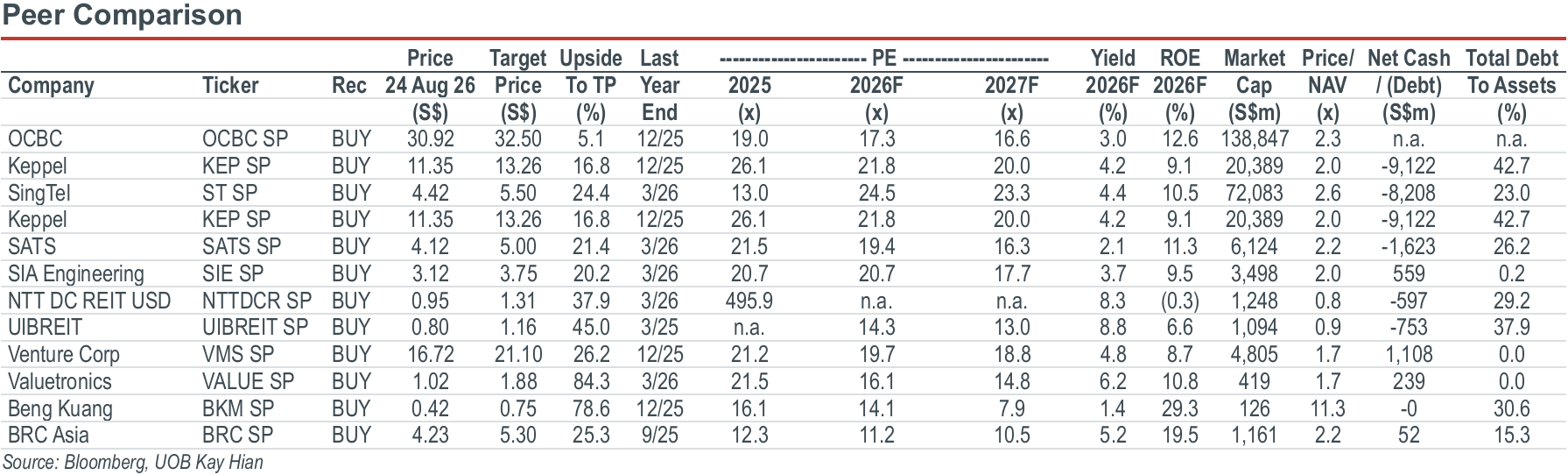
We position defensively due to near-term headwinds from fiscal strains in the US and Japan and elevated inflation from a prolonged conflict in the Middle East. Our investment themes: a) beneficiaries of higher bond yields: OCBC (Target: S$32.50); b) value creation through asset recycling and monetisation: Keppel (Target: S$13.26), SingTel (Target: S$5.50) and CityDev (Target: S$11.50); c) growth from Singapore as an Aviation Hub: SATS (Target: S$5.00) and SIA Engineering (Target: S$3.75); d) S-REITs with yields significantly above government bonds: NTT DC REIT (Target: S$1.31) and UI Boustead REIT (Target: S$1.16); e) value-oriented technology picks: Venture Corp (Target: S$21.10) and Valuetronics (Target: S$1.88); and f) SMID Gems: Beng Kuang (Target: S$0.75) and BRC Asia (Target: S$5.30).
What’s New
- We have previously cautioned that financial conditions could tighten as the Fed could potentially embark on quantitative tightening in 2027. Currently, financial conditions have already started to tighten through higher government bond yields for developed countries.
- Is the US entering a fiscal crisis? The US’ federal debt, budget deficits, and interest costs are on the rise. According to the Congressional Budget Office, the federal deficit is projected at US$1.9t in 2026. The IMF estimated that US general government debt would reach 142% of GDP in 2031, compared with 124% in 2026. Interest payments are now one of the fastest growing expenditure, exceeding US$1t annually. The US fiscal trajectory is becoming progressively unsustainable. Persistent budget deficits of around 6% of GDP, rising entitlement spending, and growing interest expenses could crowd out public investment. The US is not yet facing a full-blown fiscal crisis, but US treasury yields are now structurally higher.
- Is Japan entering a fiscal crisis? Japan's fiscal position is the most stretched among developed economies, with gross government debt at 233% of GDP in 2026. Bank of Japan's gradual normalisation of monetary policy has materially increased debt-servicing costs after many years of ultra low interest rates. An ageing population and a shrinking workforce also place pressure on social security and healthcare spending. Japan is approaching a turning point. Expansionary fiscal policies and permanent tax cuts could reverse the recent decline in the debt-to-GDP ratio. Consequently, confidence in government finances is being undermined and Japan’s fiscal standing is expected to gradually deteriorate.
Highlights
Our STI target of 6,682 is based on an equity risk premium of 3.0%, which is 1x SD below the long-term mean, and risk-free rate at 2.5%. The target represents a fair 2026F PE of 18.2x and upside of 18% for the STI.
We position defensively due to near-term headwinds from fiscal strains in the US and Japan and elevated inflation from a prolonged conflict in the Middle East. Our investment themes: a) beneficiaries of higher bond yields: OCBC (Target: S$32.50); b) value creation through asset recycling and monetisation: Keppel (Target: S$13.26), SingTel (Target: S$5.50) and CityDev (Target: S$11.50); c) growth from Singapore as an Aviation Hub: SATS (Target: S$5.00) and SIA Engineering (Target: S$3.75); d) S-REITs with yields significantly above government bonds: NTT DC REIT (Target: S$1.31) and UI Boustead REIT (Target: S$1.16); e) value-oriented technology picks: Venture Corp (Target: S$21.10) and Valuetronics (Target: S$1.88); and f) SMID Gems: Beng Kuang (Target: S$0.75) and BRC Asia (Target: S$5.30).
What’s New
- We have previously cautioned that financial conditions could tighten as the Fed could potentially embark on quantitative tightening in 2027. Currently, financial conditions have already started to tighten through higher government bond yields for developed countries.
- Is the US entering a fiscal crisis? The US’ federal debt, budget deficits, and interest costs are on the rise. According to the Congressional Budget Office, the federal deficit is projected at US$1.9t in 2026. The IMF estimated that US general government debt would reach 142% of GDP in 2031, compared with 124% in 2026. Interest payments are now one of the fastest growing expenditure, exceeding US$1t annually. The US fiscal trajectory is becoming progressively unsustainable. Persistent budget deficits of around 6% of GDP, rising entitlement spending, and growing interest expenses could crowd out public investment. The US is not yet facing a full-blown fiscal crisis, but US treasury yields are now structurally higher.
- Is Japan entering a fiscal crisis? Japan's fiscal position is the most stretched among developed economies, with gross government debt at 233% of GDP in 2026. Bank of Japan's gradual normalisation of monetary policy has materially increased debt-servicing costs after many years of ultra low interest rates. An ageing population and a shrinking workforce also place pressure on social security and healthcare spending. Japan is approaching a turning point. Expansionary fiscal policies and permanent tax cuts could reverse the recent decline in the debt-to-GDP ratio. Consequently, confidence in government finances is being undermined and Japan’s fiscal standing is expected to gradually deteriorate.
Analyst
Analyst
IMPORTANT NOTICE - DISCLOSURES AND DISCLAIMERS
This report is provided subject to, and must be read together with, the full Disclosures / Disclaimers available at this link which are incorporated by reference into this report. In particular, this report is intended for general circulation and informational purposes only and does not constitute personal investment advice or a recommendation to buy or sell any investment product or security. You should independently evaluate the information and, where necessary, seek advice from a qualified financial adviser regarding the suitability of any investment. Analyst certifications required under applicable regulations, including SEC Regulation AC (where relevant), are included in this report. By accessing, receiving or using this report, you acknowledge that you have read, understood and agreed to be bound by the Disclosures / Disclaimers, as may be amended, supplemented or updated from time to time.


