

China is well known for its long-term strategic vision and highly effective execution. As a country, it sets strategic goals decades ahead and mobilizes the entire nation’s resources behind them. When it succeeds, the results can take China’s competitiveness to a new level, while sending shockwaves around the world. Read on to find out what China is up to next.
CIO Summary
- China winning the global skills race. China dominated the 2026 WorldSkills Competition, reflecting years of concerted investment in vocational education and technical skill development.
- Vocational skills becoming a strategic priority. Beijing's success underscores its ability to mobilize nationwide resources behind long-term priorities – a proven model that has supported progress in other areas such as energy security, advanced manufacturing, export upgrading and the green transition.
- Major implications extending beyond vocational education. A strong and broad base of skilled workers could support China's ambitions for technology self-reliance and AI innovation, while also helping the country adapt to AI-driven workforce disruptions and labor market shifts.
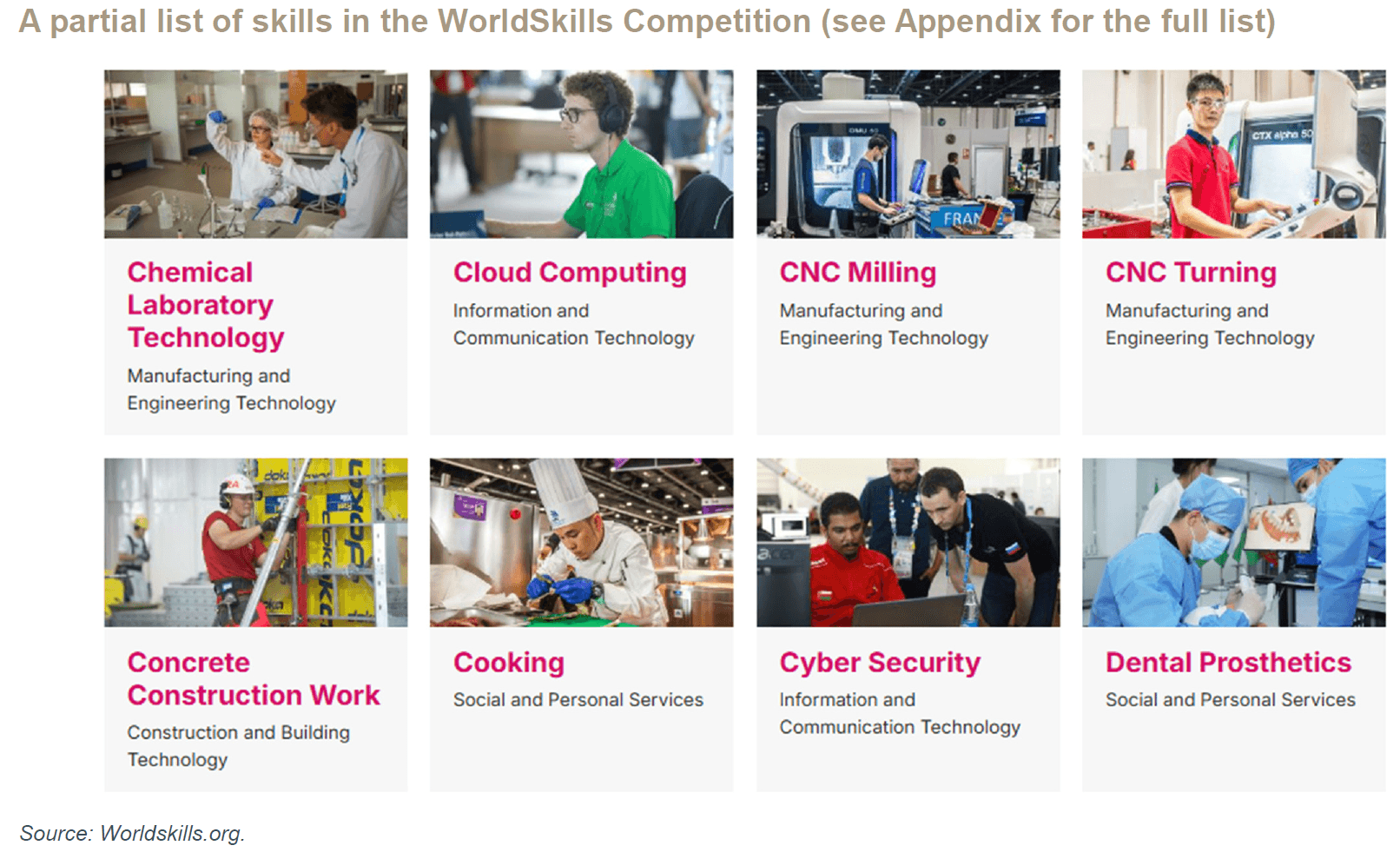
The Economist recently featured an article titled “China lavishes attention on a little-known competition”, likening the phenomenon to a “Skill Olympics”. We’d like to share a few key takeaways from the piece. Hope you find them useful.
- China is winning the skills race. Big time. China won a record 41 gold medals at the WorldSkills Competition in 2026, ten times more than second-place South Korea. The competition covers a wide range of technical disciplines, from electrical installations and automobile technology to cyber security and robotics (see Appendix).
- Skills becoming a national strategic priority. China's dominance at the “Skills Olympics” is no accident. Beijing has built an effective talent management system to identify, train and develop highly skilled workers. Contestants are selected through local, provincial and national competitions before receiving specialized training at dedicated vocational institutions and companies.
- A worthy effort to close the skilled-labor gap. China faces a significant shortage of skilled workers and continues to struggle with the social stigma attached to vocational education and blue-collar jobs. To address these issues, the government is leveraging events such as WorldSkills to raise the status of skilled trades and encourage more young people to pursue vocational careers.
Our Take
- When China mobilizes the full weight of the nation… The WorldSkills Competition result reflects not only individual excellence, but also China’s ability to achieve strategic goals once they become national priorities and mobilize the whole nation’s resources behind it. Past successes also include energy security, advanced manufacturing, export upgrading and the green transition – themes that we’ve covered in our Wealth Flash reports.
- Watch out for technology self-reliance, AI and innovation. In addition to the vocational development above, China also has a technology-focused national priority, with AI at the center of US-China strategic competition. Beijing’s track record in other strategic areas suggests a credible chance of catching up in the US-China AI race.
- The human capital behind AI: Not just PhDs. AI requires not only researchers and engineers, but also a large pool of electricians, advanced manufacturing workers, automation specialists, robotics operators and other skilled workers. Many such capabilities are covered by the WorldSkills Competition, featuring disciplines such as cloud computing, digital construction, electronics and robotics (see Appendix). China's strong commitment to vocational education therefore provides an important foundation for its AI and high-tech ambitions.
- Preparing for AI-driven workforce disruptions. In July 2025, we wrote that AI could grow into a multi-trillion-dollar industry by displacing a significant amount of “human labor”, particularly white-collar office jobs. China's emphasis on vocational education and skills development help strengthen its workforce’s practical and technical capabilities. This could leave China better positioned to adapt to the structural changes and employment disruptions brough about by AI.
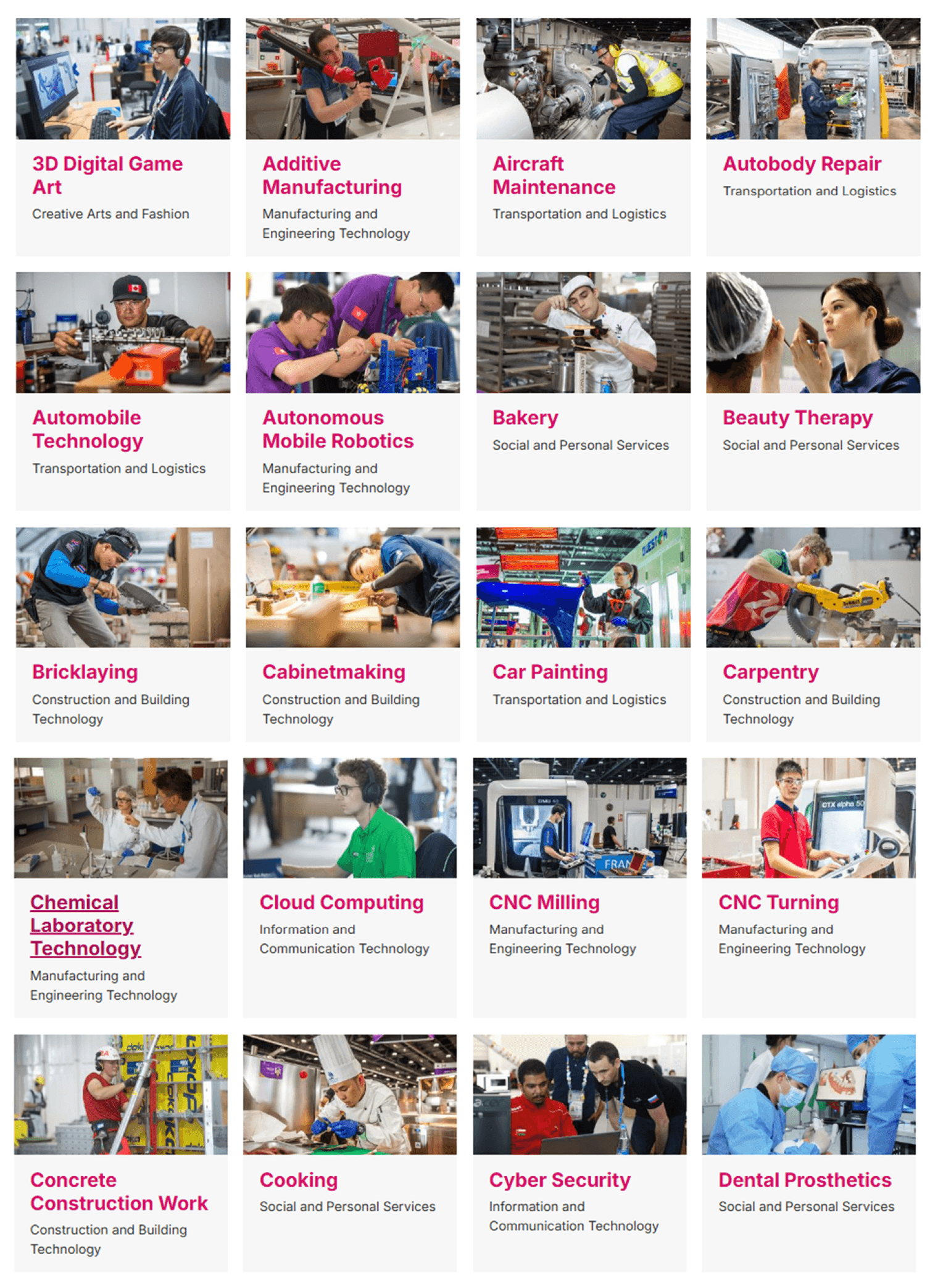
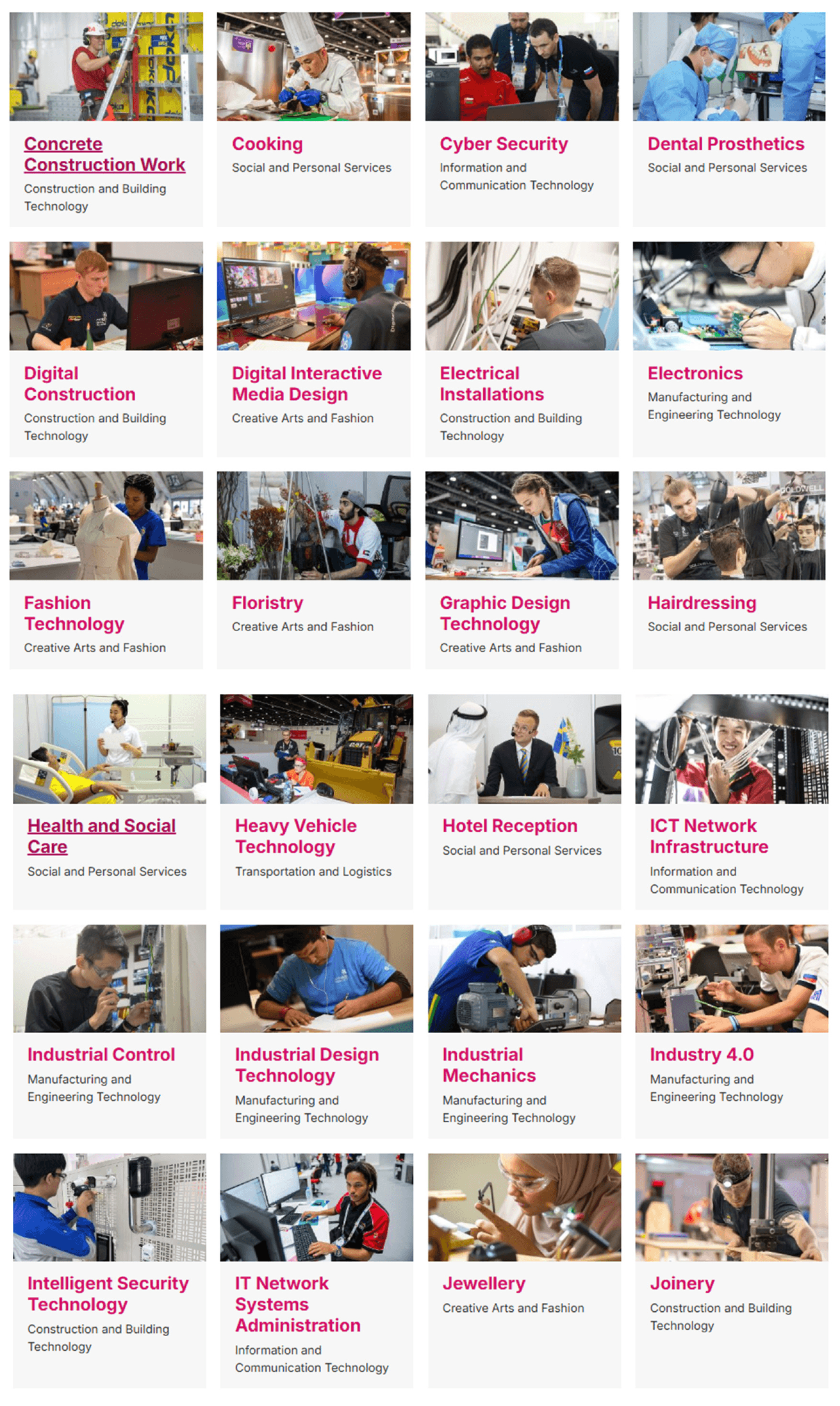
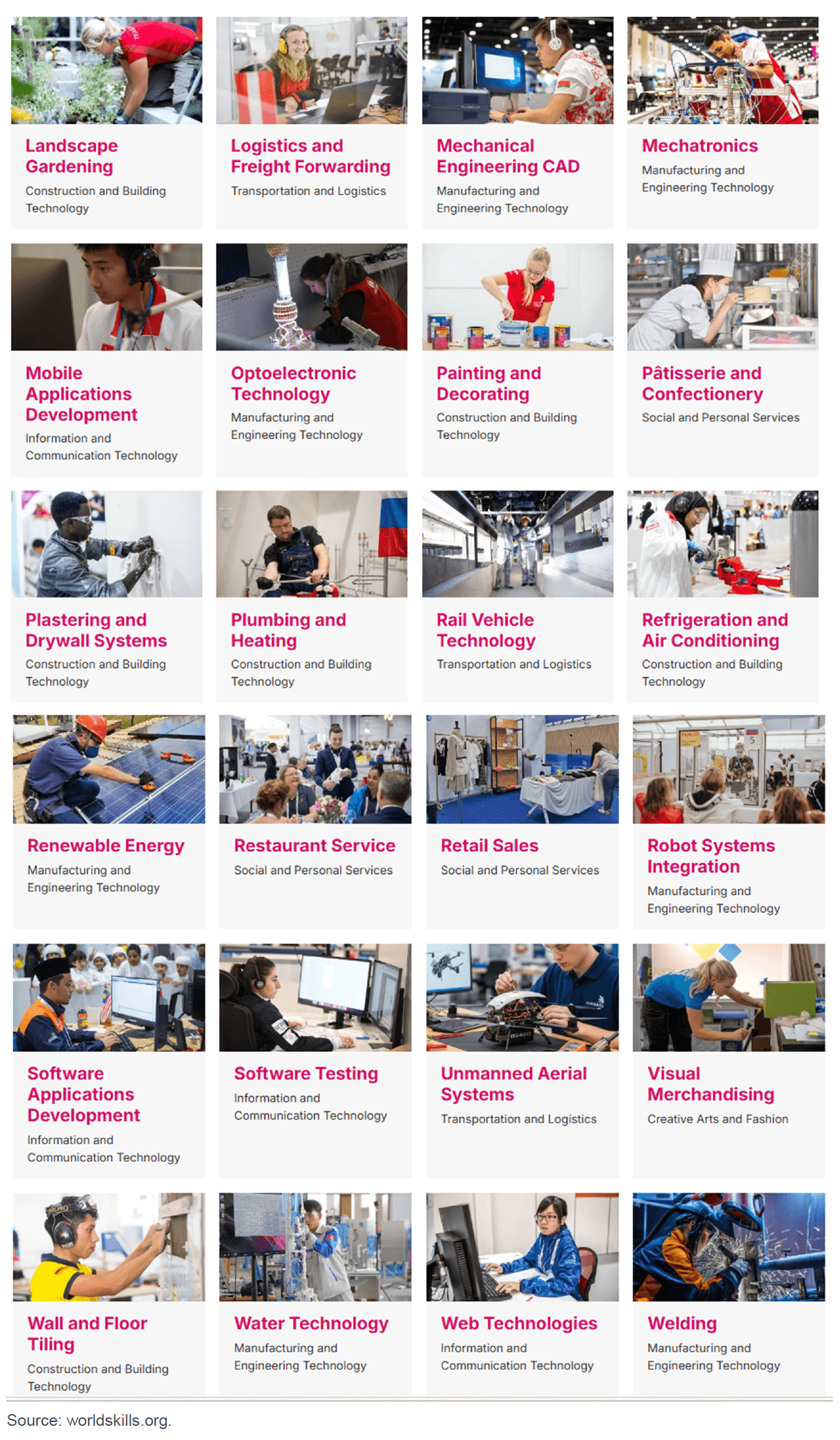
Appendix: What kind of skills are included in the WorldSkills Competition?
China is well known for its long-term strategic vision and highly effective execution. As a country, it sets strategic goals decades ahead and mobilizes the entire nation’s resources behind them. When it succeeds, the results can take China’s competitiveness to a new level, while sending shockwaves around the world. Read on to find out what China is up to next.
CIO Summary
- China winning the global skills race. China dominated the 2026 WorldSkills Competition, reflecting years of concerted investment in vocational education and technical skill development.
- Vocational skills becoming a strategic priority. Beijing's success underscores its ability to mobilize nationwide resources behind long-term priorities – a proven model that has supported progress in other areas such as energy security, advanced manufacturing, export upgrading and the green transition.
- Major implications extending beyond vocational education. A strong and broad base of skilled workers could support China's ambitions for technology self-reliance and AI innovation, while also helping the country adapt to AI-driven workforce disruptions and labor market shifts.
The Economist recently featured an article titled “China lavishes attention on a little-known competition”, likening the phenomenon to a “Skill Olympics”. We’d like to share a few key takeaways from the piece. Hope you find them useful.
- China is winning the skills race. Big time. China won a record 41 gold medals at the WorldSkills Competition in 2026, ten times more than second-place South Korea. The competition covers a wide range of technical disciplines, from electrical installations and automobile technology to cyber security and robotics (see Appendix).
- Skills becoming a national strategic priority. China's dominance at the “Skills Olympics” is no accident. Beijing has built an effective talent management system to identify, train and develop highly skilled workers. Contestants are selected through local, provincial and national competitions before receiving specialized training at dedicated vocational institutions and companies.
- A worthy effort to close the skilled-labor gap. China faces a significant shortage of skilled workers and continues to struggle with the social stigma attached to vocational education and blue-collar jobs. To address these issues, the government is leveraging events such as WorldSkills to raise the status of skilled trades and encourage more young people to pursue vocational careers.
Our Take
- When China mobilizes the full weight of the nation… The WorldSkills Competition result reflects not only individual excellence, but also China’s ability to achieve strategic goals once they become national priorities and mobilize the whole nation’s resources behind it. Past successes also include energy security, advanced manufacturing, export upgrading and the green transition – themes that we’ve covered in our Wealth Flash reports.
- Watch out for technology self-reliance, AI and innovation. In addition to the vocational development above, China also has a technology-focused national priority, with AI at the center of US-China strategic competition. Beijing’s track record in other strategic areas suggests a credible chance of catching up in the US-China AI race.
- The human capital behind AI: Not just PhDs. AI requires not only researchers and engineers, but also a large pool of electricians, advanced manufacturing workers, automation specialists, robotics operators and other skilled workers. Many such capabilities are covered by the WorldSkills Competition, featuring disciplines such as cloud computing, digital construction, electronics and robotics (see Appendix). China's strong commitment to vocational education therefore provides an important foundation for its AI and high-tech ambitions.
- Preparing for AI-driven workforce disruptions. In July 2025, we wrote that AI could grow into a multi-trillion-dollar industry by displacing a significant amount of “human labor”, particularly white-collar office jobs. China's emphasis on vocational education and skills development help strengthen its workforce’s practical and technical capabilities. This could leave China better positioned to adapt to the structural changes and employment disruptions brough about by AI.
Appendix: What kind of skills are included in the WorldSkills Competition?
Disclosures and disclaimers
This report is provided subject to, and must be read together with, the full Disclosures / Disclaimers available at this link, which are incorporated by reference into this report. In particular, this report is intended for general circulation and informational purposes only and does not constitute personal investment advice or a recommendation to buy or sell any investment product or security. You should independently evaluate the information and, where necessary, seek advice from a qualified financial adviser regarding the suitability of any investment. Analyst certifications required under applicable regulations, including SEC Regulation AC (where relevant), are included in this report. By accessing, receiving or using this report, you acknowledge that you have read, understood and agreed to be bound by the Disclosures / Disclaimers, as may be amended, supplemented or updated from time to time.


