

Wealth Flash
The Knowledge Share
China Maxxing Part II: The Geopolitical Parallel
CIO Summary
- Sovereign-level “China maxxing” emerging. Gallup and Pew data show rising global approval of China at a time when confidence in US leadership is wavering. This creates space for governments – not just consumers – to reassess their geopolitical alignments.
- Not necessarily pivoting to Beijing, yet US loss could be China’s gain. Political distancing from the US does not imply automatic alignment with China. Instead, governments are widening their strategic options, especially amid tensions over tariffs, NATO burden‑sharing, and Iran.
- From China bashing to pragmatic engagement. A surge in recent diplomatic visits to Beijing, coupled with China’s role as a key manufacturing, technology, and trade partner, signals a shift from overt “China‑bashing” toward more balanced, interest‑driven engagement.
China Tops US in Leadership Approval
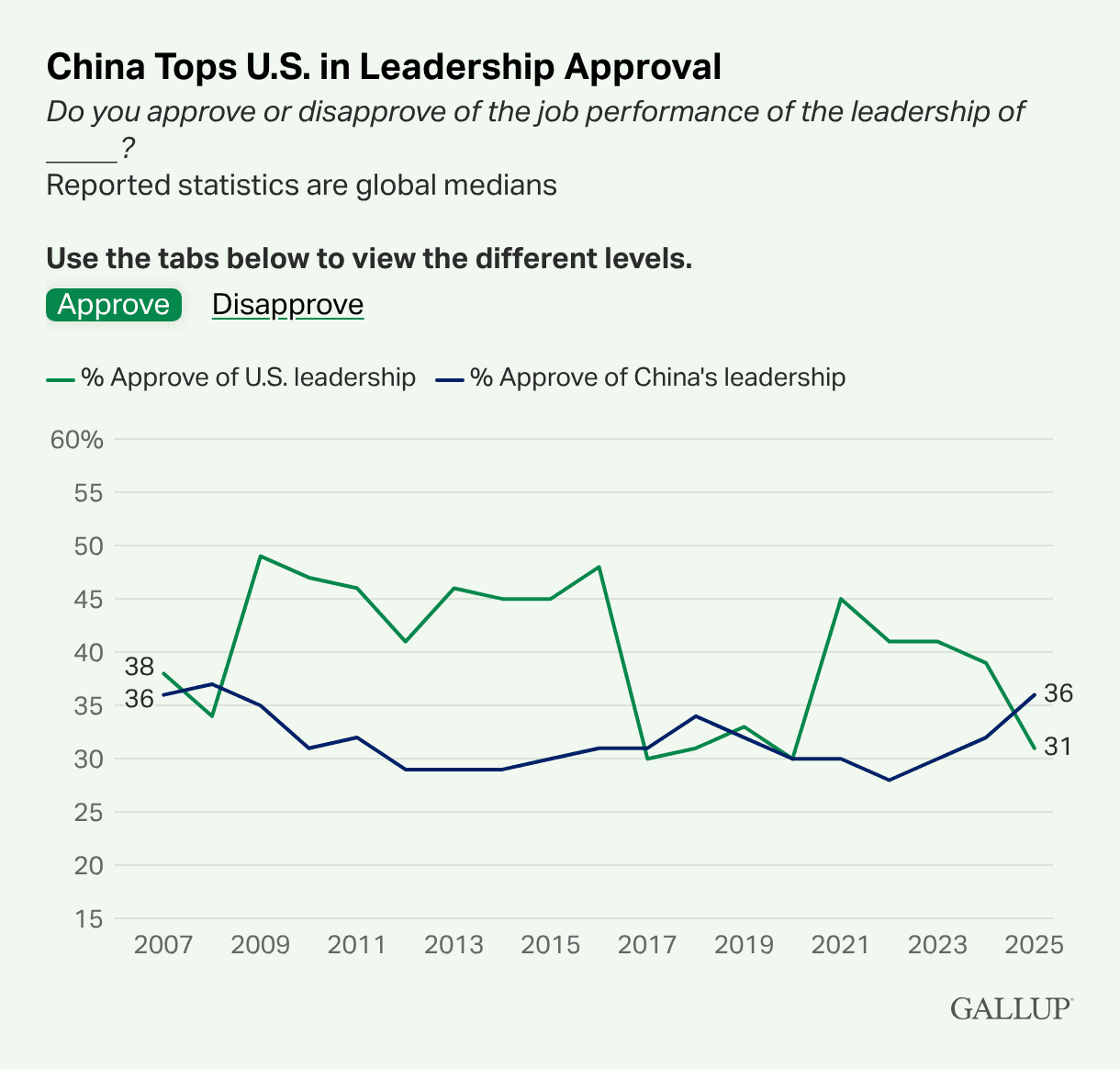
Source: Gallup (April 2026).
We recently introduced the concept of “China maxxing,” a growing subculture of young Westerners adopting Chinese lifestyles and products for self-improvement. How will this trend extend beyond consumption and social media to broader global reach and even political influence? Below is a selection of articles on this topic, along with our key takeaways. We hope you find them useful.
| Date | Source | Article |
| 2 Jun 2026 | Aljazeera | Every world leader who has visited China in 2026 in one chart |
| 17 Apr 2026 | Straits Times | A week of bustling diplomacy in Beijing as world leaders look to China for stability |
| 3 Apr 2026 | Gallup | |
| 29 Nov 2025 | Time | |
| 15 Oct 2025 | EUISS | Low trust: navigating transatlantic relations under Trump 2.0 |
| 15 Jul 2025 | Pew Research |
- China approval ratings rising. China's global leadership approval has risen to 36%, overtaking the US at 31% for the third time in two decades, according to Gallup's latest survey. Pew Research also found favourable views of China rising in 15 of 25 countries surveyed, including Canada, France and Italy. Such upticks usually coincide with periods of heightened uncertainty over US leadership.
- US unpredictability driving strategic diversification. Tensions between Washington and its traditional allies over tariffs, NATO burden-sharing and the Iran conflict have prompted more countries to reduce their US reliance. This creates conditions for China to become an option for strategic diversification. For example, the 2026 Shangri-La Dialogue in Singapore featured pushback against the US-centric framework and greater emphasis on regional security by Asian nations. While there was no direct pivot to Beijing, US loss may already be China's gain.
- A sharp pickup in diplomatic engagements with China. Beijing has hosted 26 visiting leaders and senior officials from 23 countries to date in 2026, including delegations from the US, UK, Germany, Canada, Spain, Russia and Singapore, underscoring China’s growing diplomatic weight and its appeal as an economic and strategic partner.
- Economic stability remains a key attraction. Many visiting governments are seeking investment, market access, manufacturing partnerships, technology cooperation and infrastructure opportunities, reinforcing China's position as an increasingly important economic anchor amid a more uncertain global environment.
Our Take
We are not geopolitical experts, but there seems to be an emerging ‘China‑maxxing’ trend among world governments – similar to the original consumer version. Granted, political distancing from the US does not automatically translate into alignment with China. However, it is clear that many Western countries are moving from overt “China‑bashing” toward more pragmatic engagement, driven by economic needs and strategic diversification. In this regard, President Trump serves as a key wake-up call that US diplomacy missteps and political uncertainty can have major consequences for countries that rely solely on Washington.
Stay tuned for Part III of this series, where we will dive into the investment implications.
Every world leader who has visited China in 2026 in one chart.
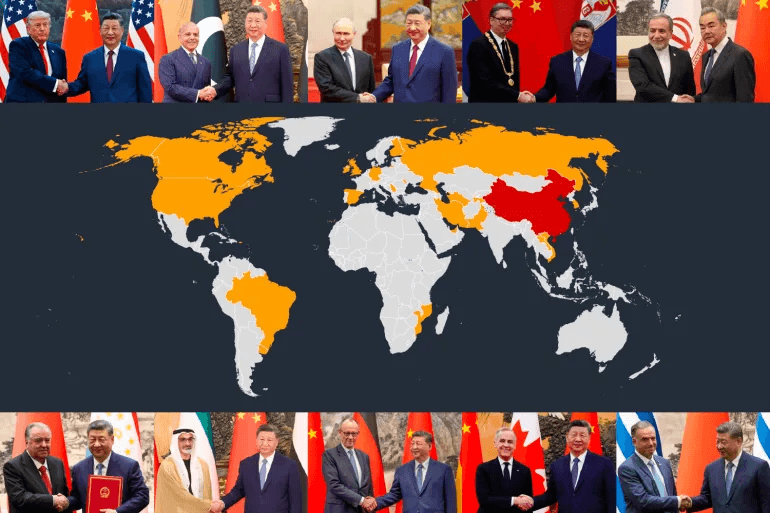
Source: Aljazeera.
CIO Summary
- Sovereign-level “China maxxing” emerging. Gallup and Pew data show rising global approval of China at a time when confidence in US leadership is wavering. This creates space for governments – not just consumers – to reassess their geopolitical alignments.
- Not necessarily pivoting to Beijing, yet US loss could be China’s gain. Political distancing from the US does not imply automatic alignment with China. Instead, governments are widening their strategic options, especially amid tensions over tariffs, NATO burden‑sharing, and Iran.
- From China bashing to pragmatic engagement. A surge in recent diplomatic visits to Beijing, coupled with China’s role as a key manufacturing, technology, and trade partner, signals a shift from overt “China‑bashing” toward more balanced, interest‑driven engagement.
China Tops US in Leadership Approval
Source: Gallup (April 2026).
We recently introduced the concept of “China maxxing,” a growing subculture of young Westerners adopting Chinese lifestyles and products for self-improvement. How will this trend extend beyond consumption and social media to broader global reach and even political influence? Below is a selection of articles on this topic, along with our key takeaways. We hope you find them useful.
| Date | Source | Article |
| 2 Jun 2026 | Aljazeera | Every world leader who has visited China in 2026 in one chart |
| 17 Apr 2026 | Straits Times | A week of bustling diplomacy in Beijing as world leaders look to China for stability |
| 3 Apr 2026 | Gallup | |
| 29 Nov 2025 | Time | |
| 15 Oct 2025 | EUISS | Low trust: navigating transatlantic relations under Trump 2.0 |
| 15 Jul 2025 | Pew Research |
- China approval ratings rising. China's global leadership approval has risen to 36%, overtaking the US at 31% for the third time in two decades, according to Gallup's latest survey. Pew Research also found favourable views of China rising in 15 of 25 countries surveyed, including Canada, France and Italy. Such upticks usually coincide with periods of heightened uncertainty over US leadership.
- US unpredictability driving strategic diversification. Tensions between Washington and its traditional allies over tariffs, NATO burden-sharing and the Iran conflict have prompted more countries to reduce their US reliance. This creates conditions for China to become an option for strategic diversification. For example, the 2026 Shangri-La Dialogue in Singapore featured pushback against the US-centric framework and greater emphasis on regional security by Asian nations. While there was no direct pivot to Beijing, US loss may already be China's gain.
- A sharp pickup in diplomatic engagements with China. Beijing has hosted 26 visiting leaders and senior officials from 23 countries to date in 2026, including delegations from the US, UK, Germany, Canada, Spain, Russia and Singapore, underscoring China’s growing diplomatic weight and its appeal as an economic and strategic partner.
- Economic stability remains a key attraction. Many visiting governments are seeking investment, market access, manufacturing partnerships, technology cooperation and infrastructure opportunities, reinforcing China's position as an increasingly important economic anchor amid a more uncertain global environment.
Our Take
We are not geopolitical experts, but there seems to be an emerging ‘China‑maxxing’ trend among world governments – similar to the original consumer version. Granted, political distancing from the US does not automatically translate into alignment with China. However, it is clear that many Western countries are moving from overt “China‑bashing” toward more pragmatic engagement, driven by economic needs and strategic diversification. In this regard, President Trump serves as a key wake-up call that US diplomacy missteps and political uncertainty can have major consequences for countries that rely solely on Washington.
Stay tuned for Part III of this series, where we will dive into the investment implications.
Every world leader who has visited China in 2026 in one chart.
Source: Aljazeera.
Disclosures and disclaimers
This report is provided subject to, and must be read together with, the full Disclosures / Disclaimers available at the following link: https://research-api.uobkayhian.com/assets/disclaimer/b2112181-0bf2-4c07-af37-3d7129735e61, which are incorporated by reference into this report. In particular, this report is intended for general circulation and informational purposes only and does not constitute personal investment advice or a recommendation to buy or sell any investment product or security. You should independently evaluate the information and, where necessary, seek advice from a qualified financial adviser regarding the suitability of any investment. Analyst certifications required under applicable regulations, including SEC Regulation AC (where relevant), are included in this report. By accessing, receiving or using this report, you acknowledge that you have read, understood and agreed to be bound by the Disclosures / Disclaimers, as may be amended, supplemented or updated from time to time.


