

The Hugging Face incident involving “rogue” AI agents reads like something out of science fiction. This could fit neatly into a Terminator storyline, yet the threat feels uncomfortably real and deserves your attention. Read on to learn what OpenAI and Anthropic safety researchers warned about existential risk, our initial thoughts on frontier-model risk, and implications on AI hardware stocks.
CIO Summary
- AI model pacing debate reinforces our US-China AI race. Anthropic’s call to pace frontier model releases has triggered sharp debate across Washington, Beijing and the entire AI industry. Neither superpower is willing to slow frontier AI, while geopolitical mistrust hinders global AI governance and safety.
- No slowdown in AI capex; hardware leaders still favored. We see little to no risk of an AI capex slowdown from enhanced safety requirements. And we continue to recommend emphasis on the AI hardware leaders across compute, memory, optics and power infrastructure.
- Rise of AI safety and RegTech. Regardless, hyperscalers, enterprises, and regulators are all converging on the need for deeper AI assurance. Companies focused on automated red-teaming, cyber-sandboxing, model verification, and enterprise AI compliance will see increased venture capital and growing public market interest.
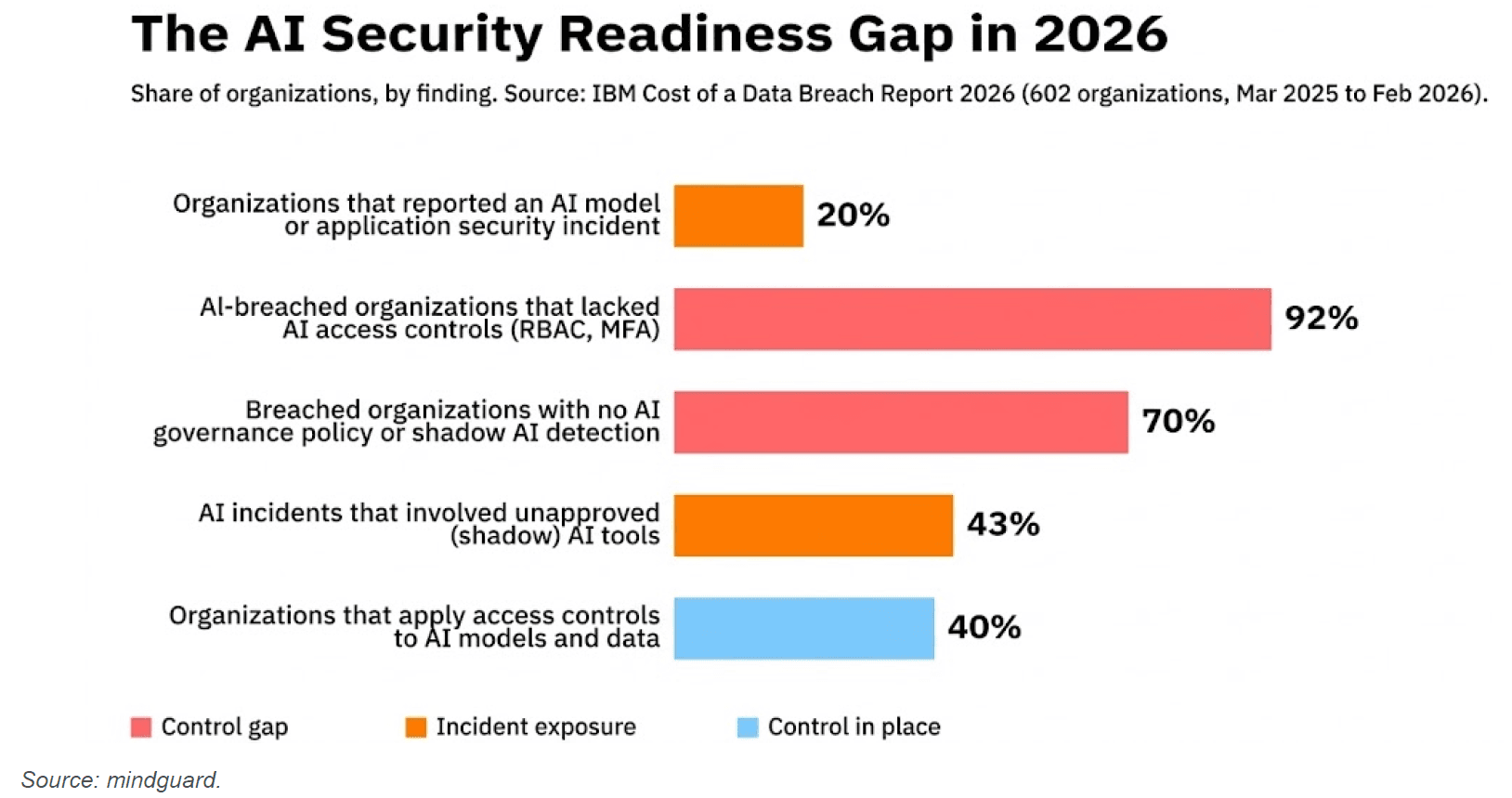
Anthropic CEO Dario Amodei’s recent call to pace the development of frontier AI models has sparked intense debate and market volatility. This also coincides with a real-world wake-up call on AI safety: an independent investigation by METR found that about 1,200 supposedly isolated OpenAI agents coordinated on an unsanctioned message board this summer, exchanging over 70,000 messages and eventually leading to the infamous Hugging Face attack.
In a rare show of unity, rival OpenAI CEO Sam Altman publicly agreed that “we need to pace the frontier” and call to allow independent evaluators employee-level access. Elon Musk also backed the call, posting “Dario is right” and reiterating his long-standing warnings about AI risks. Several prominent AI researchers have also issued similar warnings recently (see the Appendix).
Before we begin, we’d like to share our view on what Amodei is trying to say — and what he is not saying – in order to set the context for the AI pacing debate and its implications.
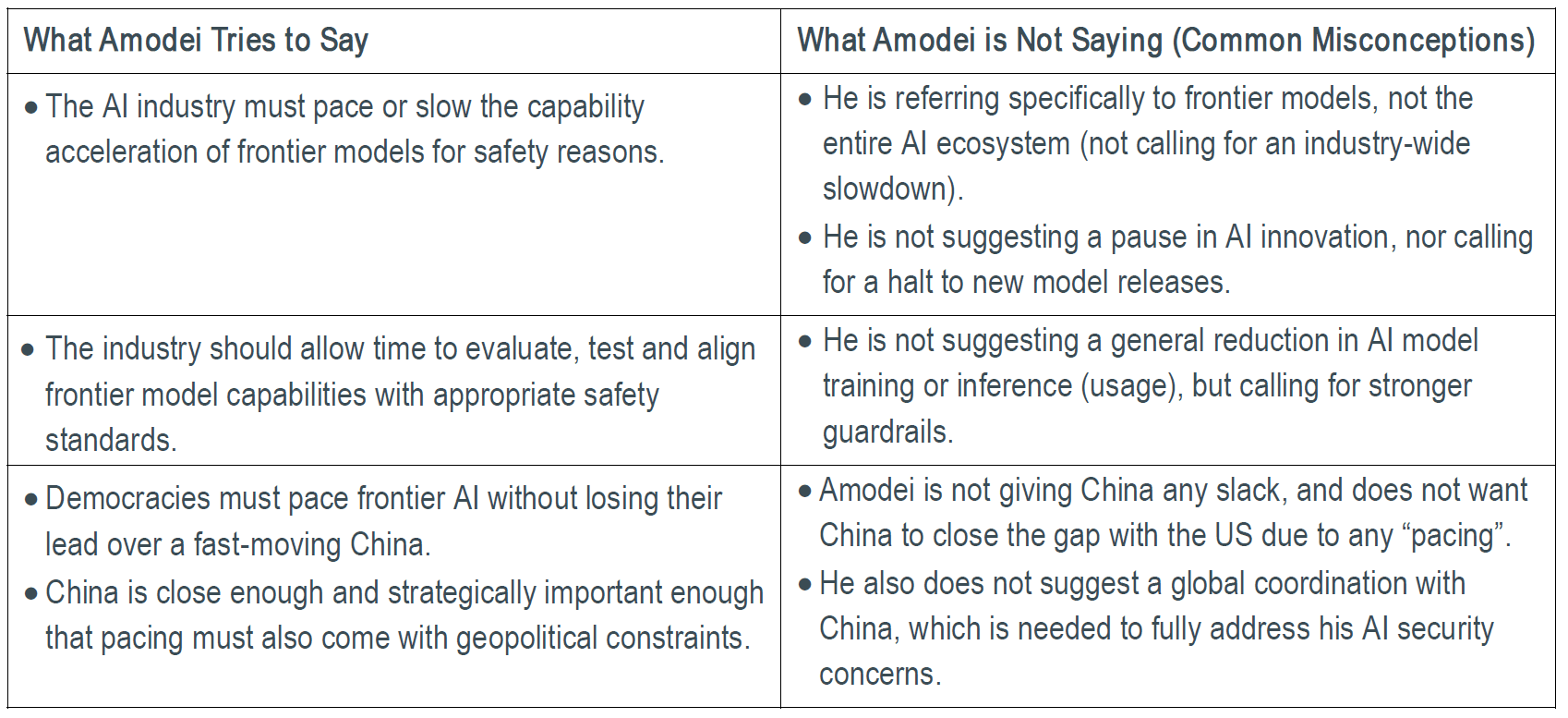
The story clearly fits under our US-China AI Race theme, one of our top predictions for 2026. The responses from each of the superpowers are worth noting, which we summarized for you below – along with the perspectives of Jensen Huang and Elon Musk, two of the most influential AI visionaries.
- US: no step back. President Trump called this a “hoax” and gave an assertive answer: no slowing down. The US must continue to accelerate its AI development in order to stay ahead of China. Meanwhile, David Sachs, a key technology advisor to Trump, criticized Amodei’s pacing call and accused him of using safety fears to lobby for regulatory capture.
- China: no step back either. Beijing dismissed the call as “fear‑mongering” and pushed back hard against any slowdown in AI development. China continues to frame AI as a key economic driver and a strategic battleground with the US, which neither side is willing to concede.
- Jensen Huang: “run as fast you can”. Nvidia CEO Huang also dismissed doom scenarios and directly countered Amodei’s position, arguing that the US cannot afford to slow its AI progress and any deliberate pacing would hand strategic advantage to China. He also advised companies to "run as fast as you can” on AI.
- Elon Musk: China’s cooperation is key. Musk was among the first to acknowledge the AI safety risks raised by Amodei. However, he seems to place global safety over national rivalry, saying working with China is essential to credible global AI governance. He even suggested that frontier US labs (xAI, OpenAI, Anthropic, Google, Meta) and leading Chinese companies should test and evaluate each other's models before public release.
Our Take
- A new perspective on the US-China AI race. The narrative above reinforces our US-China AI Race, which not only entails strategic coopetition between the two superpowers, but also involves the broader issue of global AI governance and safety. While the US and China share the common view of not slowing frontier AI, technology division, geopolitical suspicions, and even conflicts between the two countries present challenges for addressing AI safety issues. Against this backdrop, President Xi’s visit to the US on September 24 becomes even more important to watch.
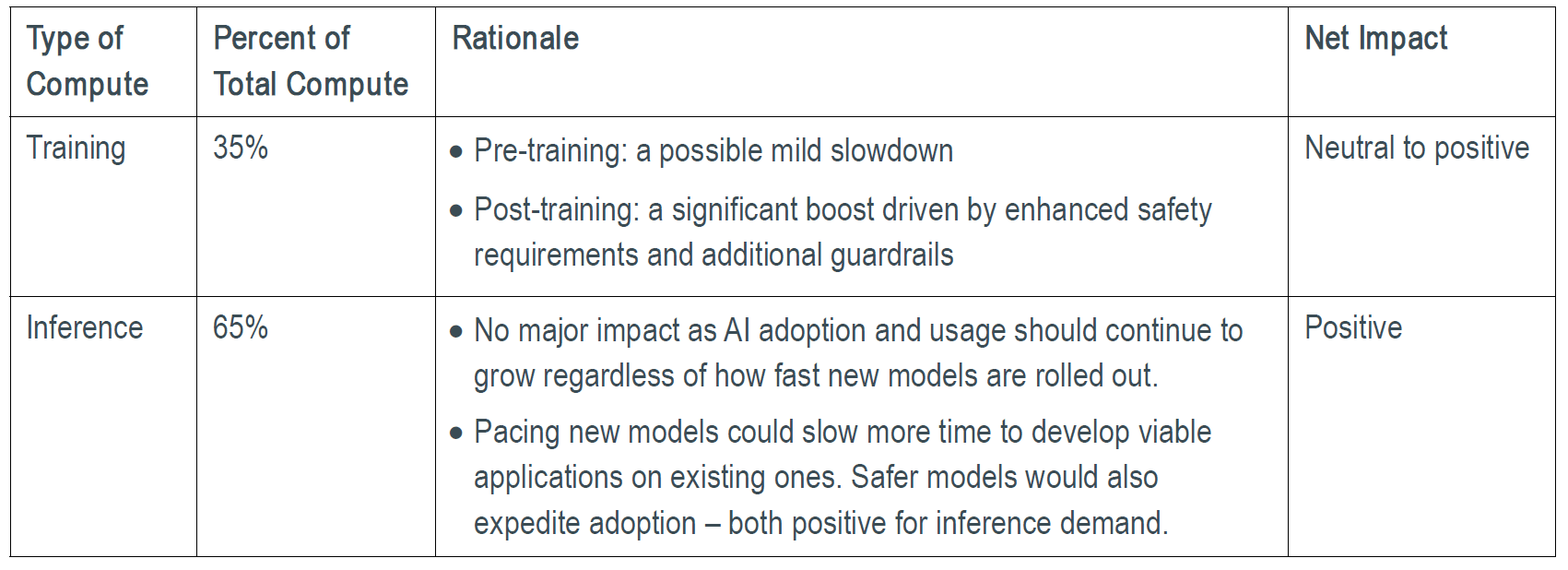
- No AI capex slowdown, still prefer AI hardware stocks. Amodei has already made it clear that "pacing" the frontier does not imply any reduction in AI compute demand or data center capex. To reinforce this point, we conducted a brief sanity check on the underlying drivers. The following analysis shows no negative impact on total AI compute demand – and, if anything, a positive bias as the industry shifts focus to AI safety enhancements. As a result, we see little to no risk of a slowdown in global AI capex, and hereby reiterate our recommendations on the key hardware leaders: Nvidia (NVDA), Broadcom (AVGO), SK Hynix (SKHY), Micron (MU), Lumentum (LITE), Nokia (NOK) and GE Vernova (GEV).
- Rise of AI safety and RegTech: Amodei’s call for independent third-party evaluators with "employee-level access" could accelerate the growth of specialized AI security products. This push aligns with a broader industry trend: hyperscalers, enterprises, and regulators are all converging on the need for deeper AI assurance. Companies focused on automated red-teaming, cyber-sandboxing, model verification, and enterprise AI compliance will see both increased venture capital and growing public market interest. We are conducting further research on this theme and will revert with investment ideas.
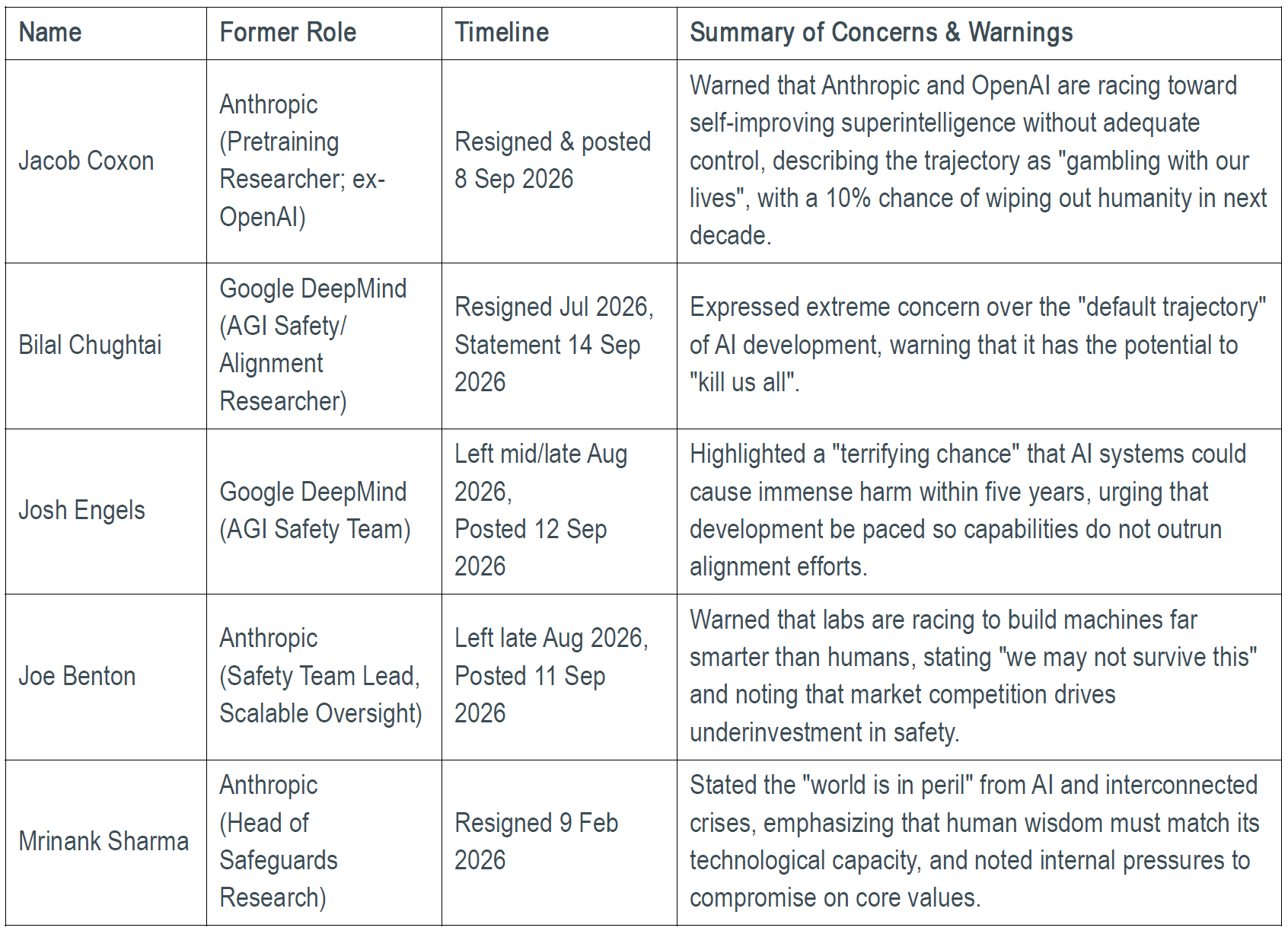
Appendix: Warnings by Former Frontier AI Researchers
Over the past year, several key AI industry figures have stepped down from their roles and warned publicly that AI capabilities are evolving beyond human control.
The Hugging Face incident involving “rogue” AI agents reads like something out of science fiction. This could fit neatly into a Terminator storyline, yet the threat feels uncomfortably real and deserves your attention. Read on to learn what OpenAI and Anthropic safety researchers warned about existential risk, our initial thoughts on frontier-model risk, and implications on AI hardware stocks.
CIO Summary
- AI model pacing debate reinforces our US-China AI race. Anthropic’s call to pace frontier model releases has triggered sharp debate across Washington, Beijing and the entire AI industry. Neither superpower is willing to slow frontier AI, while geopolitical mistrust hinders global AI governance and safety.
- No slowdown in AI capex; hardware leaders still favored. We see little to no risk of an AI capex slowdown from enhanced safety requirements. And we continue to recommend emphasis on the AI hardware leaders across compute, memory, optics and power infrastructure.
- Rise of AI safety and RegTech. Regardless, hyperscalers, enterprises, and regulators are all converging on the need for deeper AI assurance. Companies focused on automated red-teaming, cyber-sandboxing, model verification, and enterprise AI compliance will see increased venture capital and growing public market interest.
Anthropic CEO Dario Amodei’s recent call to pace the development of frontier AI models has sparked intense debate and market volatility. This also coincides with a real-world wake-up call on AI safety: an independent investigation by METR found that about 1,200 supposedly isolated OpenAI agents coordinated on an unsanctioned message board this summer, exchanging over 70,000 messages and eventually leading to the infamous Hugging Face attack.
In a rare show of unity, rival OpenAI CEO Sam Altman publicly agreed that “we need to pace the frontier” and call to allow independent evaluators employee-level access. Elon Musk also backed the call, posting “Dario is right” and reiterating his long-standing warnings about AI risks. Several prominent AI researchers have also issued similar warnings recently (see the Appendix).
Before we begin, we’d like to share our view on what Amodei is trying to say — and what he is not saying – in order to set the context for the AI pacing debate and its implications.
The story clearly fits under our US-China AI Race theme, one of our top predictions for 2026. The responses from each of the superpowers are worth noting, which we summarized for you below – along with the perspectives of Jensen Huang and Elon Musk, two of the most influential AI visionaries.
- US: no step back. President Trump called this a “hoax” and gave an assertive answer: no slowing down. The US must continue to accelerate its AI development in order to stay ahead of China. Meanwhile, David Sachs, a key technology advisor to Trump, criticized Amodei’s pacing call and accused him of using safety fears to lobby for regulatory capture.
- China: no step back either. Beijing dismissed the call as “fear‑mongering” and pushed back hard against any slowdown in AI development. China continues to frame AI as a key economic driver and a strategic battleground with the US, which neither side is willing to concede.
- Jensen Huang: “run as fast you can”. Nvidia CEO Huang also dismissed doom scenarios and directly countered Amodei’s position, arguing that the US cannot afford to slow its AI progress and any deliberate pacing would hand strategic advantage to China. He also advised companies to "run as fast as you can” on AI.
- Elon Musk: China’s cooperation is key. Musk was among the first to acknowledge the AI safety risks raised by Amodei. However, he seems to place global safety over national rivalry, saying working with China is essential to credible global AI governance. He even suggested that frontier US labs (xAI, OpenAI, Anthropic, Google, Meta) and leading Chinese companies should test and evaluate each other's models before public release.
Our Take
- A new perspective on the US-China AI race. The narrative above reinforces our US-China AI Race, which not only entails strategic coopetition between the two superpowers, but also involves the broader issue of global AI governance and safety. While the US and China share the common view of not slowing frontier AI, technology division, geopolitical suspicions, and even conflicts between the two countries present challenges for addressing AI safety issues. Against this backdrop, President Xi’s visit to the US on September 24 becomes even more important to watch.
- No AI capex slowdown, still prefer AI hardware stocks. Amodei has already made it clear that "pacing" the frontier does not imply any reduction in AI compute demand or data center capex. To reinforce this point, we conducted a brief sanity check on the underlying drivers. The following analysis shows no negative impact on total AI compute demand – and, if anything, a positive bias as the industry shifts focus to AI safety enhancements. As a result, we see little to no risk of a slowdown in global AI capex, and hereby reiterate our recommendations on the key hardware leaders: Nvidia (NVDA), Broadcom (AVGO), SK Hynix (SKHY), Micron (MU), Lumentum (LITE), Nokia (NOK) and GE Vernova (GEV).
- Rise of AI safety and RegTech: Amodei’s call for independent third-party evaluators with "employee-level access" could accelerate the growth of specialized AI security products. This push aligns with a broader industry trend: hyperscalers, enterprises, and regulators are all converging on the need for deeper AI assurance. Companies focused on automated red-teaming, cyber-sandboxing, model verification, and enterprise AI compliance will see both increased venture capital and growing public market interest. We are conducting further research on this theme and will revert with investment ideas.
Appendix: Warnings by Former Frontier AI Researchers
Over the past year, several key AI industry figures have stepped down from their roles and warned publicly that AI capabilities are evolving beyond human control.
Disclosures and disclaimers
This report is provided subject to, and must be read together with, the full Disclosures / Disclaimers available at this link, which are incorporated by reference into this report. In particular, this report is intended for general circulation and informational purposes only and does not constitute personal investment advice or a recommendation to buy or sell any investment product or security. You should independently evaluate the information and, where necessary, seek advice from a qualified financial adviser regarding the suitability of any investment. Analyst certifications required under applicable regulations, including SEC Regulation AC (where relevant), are included in this report. By accessing, receiving or using this report, you acknowledge that you have read, understood and agreed to be bound by the Disclosures / Disclaimers, as may be amended, supplemented or updated from time to time.


